





A Gift from Halley's Comet
The Orionid meteor shower is one of two annual displays caused by the most famous comet in history, 1P/Halley. While Halley's Comet itself only visits the inner solar system every 76 years—its next appearance is in 2061—it leaves a trail of dust and icy
debris along its orbital path. Each October, Earth’s journey around the sun takes it through this stream of particles. These tiny fragments, many no bigger than a grain of sand, slam into our atmosphere at tremendous speeds of about 66 kilometres per second. The friction causes them to burn up, creating the brilliant streaks of light we call meteors or 'shooting stars'. These meteors are known for being particularly fast and bright, and they can sometimes leave glowing trails that linger for a moment in the sky.
Peak Dates and Times for India
The Orionid meteor shower is active from early October to early November, but the best time to watch will be during its peak on the night of October 21-22, 2026. In a normal year under ideal dark-sky conditions, you might see between 10 to 20 meteors per hour. However, there's a challenge for viewers in 2026: a bright waxing gibbous moon will be in the sky for much of the night, washing out the fainter meteors. But don't be discouraged. The key for Indian skywatchers is to wait until the hours before dawn. The moon will set sometime between 2:30 AM and 4:00 AM IST, depending on your exact location. This provides a precious, dark window of opportunity to view the shower before the morning sun brightens the sky. The best viewing will be in these late-night, pre-dawn hours.
How to Find the Orionids
The shower gets its name because the meteors appear to radiate from a point in the constellation Orion the Hunter. To find it, look for the three bright stars that form Orion's belt, a familiar sight in the eastern sky after 10 PM. The radiant point is located near Orion’s 'shoulder', just northeast of the bright, reddish star Betelgeuse. However, you don’t need to stare directly at the radiant. In fact, it's better not to. Meteors will appear across the entire sky, and those seen 45 to 90 degrees away from the radiant will appear longer and more dramatic. The best strategy is to find a comfortable spot, lie back, and take in as wide an expanse of the sky as possible. Your eyes will do the rest.
Tips for the Perfect Viewing Experience
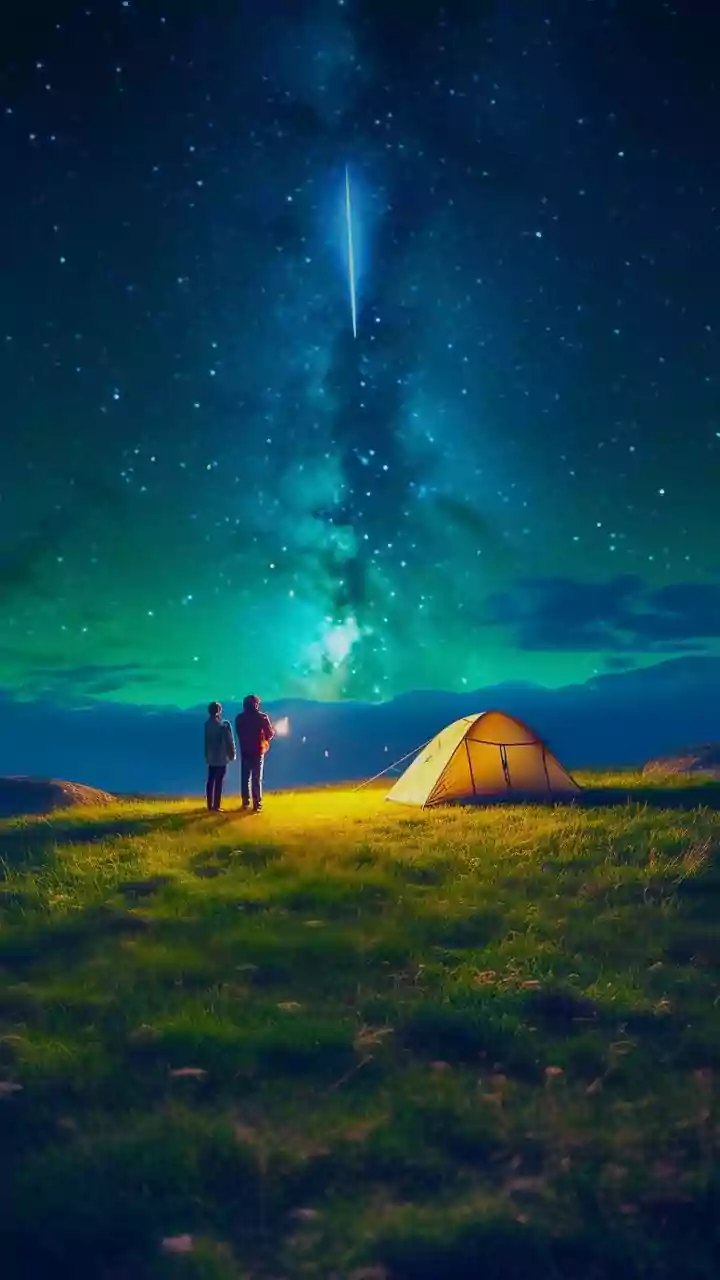
To make the most of this celestial event, you don't need a telescope or binoculars; your eyes are the best tool for the job. The most important factor is getting away from urban light pollution. Head to a rural area, a park, or any spot with a clear, dark horizon. Once you've found your spot, give your eyes about 20 to 30 minutes to fully adapt to the darkness—and try to avoid looking at your bright phone screen. October nights can get chilly, so bring a blanket or a comfortable reclining chair and dress in warm layers. Finally, be patient. Meteors often appear in spurts with lulls in between. Treat it not as a constant downpour, but as a quiet, cosmic fishing trip where the reward is a fleeting streak of ancient light.