






The Sunshine Vitamin Paradox
It’s a curious situation: in a country blessed with abundant sunshine, a vast majority of the population, from children to the elderly, suffers from Vitamin D deficiency. This essential nutrient, critical for calcium absorption, strong bones, and robust
immune function, is often in short supply. Factors like modern indoor lifestyles, high levels of air pollution that block UVB rays, and cultural practices that limit skin exposure all contribute to this widespread health concern. While our bodies are designed to produce Vitamin D from sunlight, many of us are simply not getting enough, making dietary sources more important than ever.
Food Fortification: A Public Health Ally
To combat this 'hidden hunger,' food fortification has emerged as a key public health strategy in India. Fortification is the process of deliberately adding essential micronutrients, like Vitamin D, to staple foods that are consumed regularly by a large part of the population. This approach doesn't require people to change their eating habits. The Food Safety and Standards Authority of India (FSSAI) has established regulations for fortifying common items like milk, edible oil, wheat flour, and rice to improve the nutritional intake across the country and tackle deficiencies on a mass scale.
Your First Clue: The +F Logo
The simplest way to identify a fortified food product is by looking for the '+F' logo on the packaging. This blue, circular logo, featuring a plus sign and the letter 'F', is a government-regulated symbol indicating that the food item has been fortified with micronutrients according to FSSAI standards. When you see this logo on a packet of milk, a bottle of oil, or a bag of atta, it’s a clear and trustworthy signal that the product contains added vitamins and minerals. The logo is designed to be easily recognizable, empowering consumers to make healthier choices at a glance.
Reading the Nutrition Information Panel
Beyond the logo, the nutrition information panel on the back of the pack provides the details. When looking for Vitamin D, scan the table of nutrients. It will typically be listed as 'Vitamin D' with the amount given in micrograms (mcg or µg) or International Units (IU) per serving or per 100g. The FSSAI also mandates that if a product is fortified, the added nutrient must be declared on the label. You can also check the ingredients list. Ingredients are listed in descending order by weight, so while the fortificant might be near the end of the list due to the small quantities used, its presence confirms fortification.
Common Fortified Foods in Your Kitchen
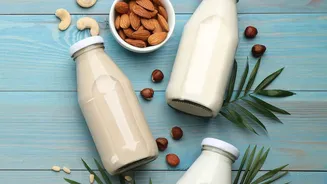
Keep an eye out for Vitamin D fortification in several everyday staples. Edible oils and milk are the most commonly fortified products with Vitamin D in India. Many brands of milk, including toned and double-toned varieties, as well as plant-based milks like soy and almond milk, now come with added Vitamin D. Similarly, various cooking oils are fortified. Some brands of atta (wheat flour) and breakfast cereals also feature on the list of fortified foods. Always check the package, as fortification is often a voluntary practice by manufacturers unless mandated for specific government programmes.
Balancing Fortified and Natural Sources
Fortified foods are an excellent way to supplement your Vitamin D intake, but they work best alongside natural sources. The most potent natural source remains sensible sun exposure. Foods naturally rich in Vitamin D are less common, especially in vegetarian diets, but include fatty fish like salmon, mackerel, and hilsa, as well as egg yolks and certain mushrooms exposed to UV light. For many Indians, a combination of some sun, a diet that includes naturally rich or fortified foods, is the most practical approach to keeping Vitamin D levels in a healthy range.