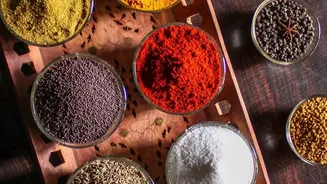







Understanding Your Star Ingredients
At the heart of many beloved Indian recipes, from sambar to tangy chutneys, is the dynamic duo of tamarind and cumin. Tamarind, or 'imli', provides a complex sourness that is deeper and fruitier than lemon or vinegar. It comes in several forms: a compressed
block of pulp, a ready-to-use paste, or a thick concentrate, each with varying intensity. Cumin, or 'jeera', is its perfect partner. Its flavour is warm, earthy, and slightly nutty, providing a savoury foundation that keeps tamarind's bright acidity in check. Regular brown cumin is the workhorse here, used either as whole seeds to infuse oil or as a ground powder for seamless blending.
The Sweet Counterbalance
The most direct way to tame excessive sourness is to introduce a sweet element. In Indian cooking, the traditional choice is jaggery ('gur'), an unrefined sugar with rich, molasses-like notes. A small piece of jaggery dissolved into a curry or dal doesn't just make it sweet; it rounds out the sharp edges of the tamarind, creating a more harmonious and complex flavour profile. If you don't have jaggery, brown sugar or even a touch of honey can work, but jaggery provides a depth that complements the other spices beautifully. The key is to add it incrementally, tasting as you go until the balance feels right.
Soften the Edges with Fat
Fat is a powerful moderator of flavour. Rich ingredients like coconut milk, yogurt, cream, or even ghee can significantly mellow the intensity of sour notes. In South Indian dishes like a tangy fish curry, coconut milk provides a creamy, luscious base that softens the tamarind's sharp punch without erasing it. Similarly, a spoonful of yogurt or a dollop of ghee stirred in at the end can add richness and smooth out the flavours in a dal or vegetable dish. Fat coats the palate, providing a buffer against aggressive acidity and helping to carry the aromatic flavours of the spices.
The Supporting Role of Salt and Other Spices
Don't underestimate the power of salt. Beyond simply making food taste salty, it can actually enhance sweetness and suppress sour and bitter tastes. If your dish tastes a little too sharp, ensure it's properly salted before you add more sweetener. Often, a final pinch of salt is all that’s needed to make the flavours pop and fall into place. Furthermore, other spices in your 'masala' work together to create balance. Coriander adds a citrusy brightness, turmeric its earthy warmth, and chilli its heat. Cumin, in particular, acts as a grounding force against the high notes of tamarind.
Perfecting Your Cumin Technique
How you use cumin greatly influences the final taste. The technique of 'tadka', or tempering, where whole cumin seeds are sizzled in hot oil or ghee, is fundamental. This process blooms the spice, releasing its aromatic oils and infusing the entire dish with its warm, savoury flavour from the very start. This provides a robust base that can stand up to the tamarind added later. Using roasted ground cumin as a finishing spice offers a different effect, lending a toastier, more intense aroma that can be sprinkled over a dish just before serving, adding another layer of complexity that complements the sour tang.
Taste, Adjust, and Trust Your Palate
Ultimately, balancing flavours is not a rigid science but an intuitive art. The strength of tamarind can vary between batches and brands, so it's crucial to start with less than you think you need. A good rule is to add the tamarind water after the vegetables have cooked, then simmer gently. Boiling it aggressively can intensify its sourness. The most important rule is to taste at every stage. Add the tamarind, then taste. Add a pinch of jaggery, and taste again. Check the salt, and taste again. This constant feedback allows you to make small, informed adjustments, guiding the dish to that perfect, delicious equilibrium.