




From State Monopoly to a Bustling Marketplace
Until recently, the Indian space sector was the exclusive domain of the Indian Space Research Organisation (ISRO). While private firms acted as suppliers, the end-to-end design, development, and operation of space missions remained firmly in government
hands. That paradigm shifted dramatically with reforms that began in 2020 and were solidified by the landmark Indian Space Policy 2023. This policy threw open the doors to the final frontier, allowing non-government entities to undertake everything from building satellites and launch vehicles to providing space-based services. The result has been an explosion of entrepreneurial activity, with the number of Indian space startups soaring from just a handful to over 450. The goal is to transform India's space economy, projected to grow from around $8.4 billion today to over $40 billion by 2030.
The New Constellation of Innovators
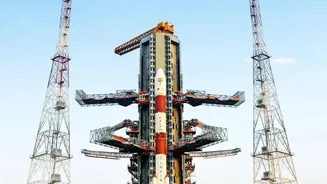
This new ecosystem isn't just theoretical; it's launching rockets and deploying satellites. In July 2026, Skyroot Aerospace made history by launching Vikram-1, the first privately developed Indian rocket to successfully reach orbit. This milestone, which placed India alongside the US and China as nations with private orbital launch capability, was a powerful validation of the new policy.
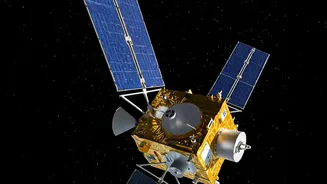
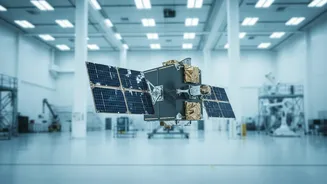
Other startups are right behind. Agnikul Cosmos is pioneering rapid rocket manufacturing with its powerful, single-piece 3D-printed engines. The company has successfully tested clusters of these engines, a critical step towards its own orbital launcher, Agnibaan. Meanwhile, in orbit, Pixxel is operating a constellation of advanced hyperspectral satellites that act as a 'health monitor for the planet', providing unprecedented data for agriculture, mining, and environmental protection. And companies like Dhruva Space are building the essential pick-and-shovel infrastructure, manufacturing satellite deployers and components that are critical for the entire ecosystem.
Fueling the Ascent
This Cambrian explosion of innovation is being powered by a surge in investment and strong institutional support. At the heart of the new ecosystem is IN-SPACe (Indian National Space Promotion and Authorisation Centre), an autonomous single-window agency that promotes, authorises, and supervises all private space activities. By providing regulatory clarity and facilitating access to ISRO's world-class facilities and expertise, IN-SPACe has become a crucial enabler. It has already facilitated hundreds of millions of dollars in investment. The government has further bolstered this with a ₹1,000 crore Venture Capital fund to provide early-stage capital to promising startups, ensuring that good ideas don't fail for lack of funding.
ISRO's New Orbit: From Pilot to Co-Pilot
The rise of the private sector doesn't mean ISRO is retiring. Instead, its role is evolving. Freed from the routine tasks of manufacturing operational launch vehicles and satellites, the national agency can now dedicate its formidable resources to what it does best: cutting-edge research and development, deep-space exploration, and national security missions. The Indian Space Policy 2023 explicitly tasks ISRO with focusing on the science and technology of the future, while transferring mature technologies to industry for commercial exploitation. This creates a symbiotic relationship. Startups benefit from ISRO's decades of experience and mentorship, while ISRO gains a vibrant industrial base that can accelerate its own ambitious projects, from human spaceflight to missions to Mars and Venus.