






The Phantom Subscription Drain
Remember that free trial for a streaming service you signed up for six months ago? Or the premium app you downloaded for a one-time project? These are the phantom subscriptions, quietly siphoning money from your account each month. They thrive on forgetfulness.
Because each charge is small—$4.99 here, $9.99 there—we tend to ignore them. But over a year, these phantoms can haunt your budget to the tune of hundreds of dollars. **How to Fix It:** Your mission is simple: conduct a subscription audit. Comb through your last three months of bank and credit card statements. Look for any recurring charges you don't recognize or no longer value. Be ruthless. If you haven't used a service in a month, you probably don't need it. Cancel it immediately. Services like Trim or Truebill can also help automate this process by identifying and canceling subscriptions for you.
The Daily 'Just a Coffee' Tax
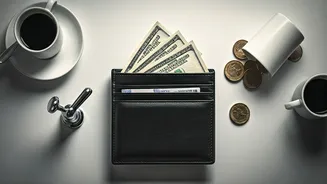
It feels harmless. A latte on the way to work, a soda from the vending machine, an energy drink to beat the afternoon slump. We justify these as small, necessary treats. But this daily ritual is a significant money leak disguised as a pick-me-up. A $6 specialty coffee five times a week adds up to $30 a week, or over $1,500 a year. It's a stealth tax on your routine that you’ve voluntarily opted into. **How to Fix It:** This isn't about giving up caffeine; it's about being smarter with it. Invest in a quality travel mug and start brewing at home. The initial cost of good coffee beans or a simple espresso machine is quickly offset by the savings. If the ritual is what you crave, challenge yourself to cut back. Try making it a twice-a-week treat instead of a daily habit. You’ll save money and appreciate the coffee more.
The Delivery Fee Delusion
The convenience of food delivery is undeniable. With a few taps, a hot meal appears at your door. But that convenience comes at a steep price, hidden in a cascade of fees. There's the delivery fee, a service fee, sometimes a small order fee, and then the tip. A $15 meal can easily balloon to $25 or more. We tell ourselves it's just for tonight, but 'tonight' happens two or three times a week for many people, turning a convenience into a major budget-buster. **How to Fix It:** Plan ahead. Instead of ordering when you're already hungry and tired, try meal prepping simple dinners for the week. Even stocking your freezer with a few easy-to-heat meals can save you from a last-minute delivery splurge. If you must order, look for restaurants offering free delivery or opt for pickup—it still saves you cooking time without the exorbitant fees.
The 'It's on Sale!' Impulse Trap
Marketers are experts at creating artificial urgency. 'Limited time offer!' '50% off today only!' These phrases trigger a fear of missing out (FOMO) and short-circuit our rational decision-making. We buy things we don't need simply because the price seems too good to pass up. But saving 50% on something you wouldn't have bought otherwise isn't saving money; it's spending 50% more than you planned. **How to Fix It:** Institute a 24-hour rule for any non-essential purchase over a certain amount, say $50. If you see something you want, add it to your digital cart or make a note of it, but don't buy it. Wait a full day. More often than not, the initial impulse will fade, and you'll realize you can live without it. This simple pause gives your logical brain time to catch up with your emotional one.
The Automatic Renewal Ambush
Similar to phantom subscriptions but often much larger, this leak involves annual renewals for services like gym memberships, software licenses, or warehouse club memberships. Companies bank on you not noticing the charge until it's too late. They send a vague email reminder (if any), and suddenly you're out $100 or more for a service you may have stopped using months ago. **How to Fix It:** Whenever you sign up for an annual service, immediately go into your calendar and set a reminder for one month before the renewal date. This gives you ample time to evaluate whether you still need the service and to go through the often-deliberately-cumbersome cancellation process. Better yet, if given the option, turn off 'auto-renew' the day you sign up.