


The Heart of Winter Cuisine
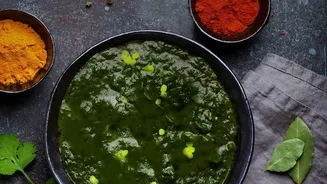
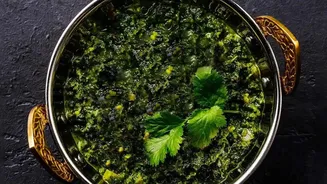
Sarson ka Saag is the quintessential winter delicacy in many parts of India, especially Punjab. Its origins trace back to the rural heartlands, where mustard crops flourish in the cooler months. Traditionally, this dish was a way to make the most of the seasonal
harvest, providing a nourishing and warming meal during the cold season. The slow-cooking process, often done for hours in earthen pots, was perfect for farming communities, allowing the greens to break down into a creamy, flavourful paste while people tended to other chores. This connection to the land and the season is what makes saag a cherished comfort food, deeply woven into the cultural fabric of winter.
Why Mustard Greens Are The Star
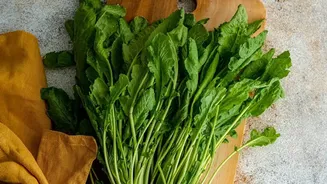
The primary ingredient, sarson or mustard greens, gives the dish its name and its distinct, slightly bitter and peppery flavour. According to Ayurveda, mustard leaves are considered 'warming' in nature, making them ideal for boosting circulation and digestion during colder weather. They are also a nutritional powerhouse, packed with vitamins A, C, and K, as well as iron, calcium, and antioxidants that help strengthen immunity during the flu season. While their pungent taste can be strong, it is this very quality that defines the authentic character of the saag.
The Art of the Perfect Blend
A great Sarson ka Saag is rarely made with mustard greens alone. The secret lies in the blend of other leafy vegetables that balance the flavours and textures. Spinach (palak) is commonly added to mellow the bitterness of the mustard leaves and provide a smoother, creamier base. Other greens like bathua (pigweed) add an earthy depth, while a handful of fenugreek (methi) can introduce a subtle aroma. This combination is not just for taste; it creates a more complex nutritional profile. The process is a culinary art form, transforming a bundle of robust greens into a harmonious and palatable dish.
Slow Cooking and the Role of Maize Flour
Patience is a key ingredient in making authentic saag. The greens are traditionally simmered slowly for a long time, which helps in breaking down the fibrous leaves and melding all the flavours together beautifully. To achieve the signature thick, creamy consistency, makki ka atta (maize flour or cornmeal) is added during the cooking process. This not only acts as a thickener but also contributes a subtle sweetness that helps cut through the pungency of the mustard greens, creating a perfectly balanced dish.
The Finishing Touch: A Ghee Tadka
The final, crucial step that elevates the saag is the tadka, or tempering. Just before serving, a generous amount of ghee is heated, and a mixture of chopped garlic, ginger, and sometimes onions and dried red chillies is fried until fragrant and golden. This aromatic tempering is poured over the cooked greens, infusing the dish with a rich, irresistible flavour and aroma. The ghee not only adds richness but also helps the body absorb the fat-soluble vitamins present in the greens. It is this finishing touch that transforms the humble greens into a celebratory dish.
How to Serve Sarson ka Saag
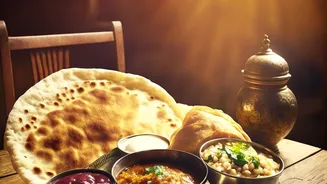
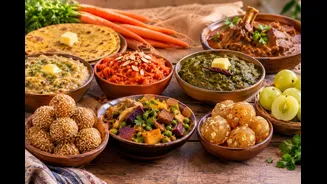
The classic and most beloved way to serve Sarson ka Saag is with Makki di Roti, a rustic flatbread made from maize flour. The combination is a match made in heaven. The dish is almost always served with a generous dollop of white butter (makkhan) melting on top, adding another layer of creamy richness. Common accompaniments include pieces of jaggery (gur) to offer a sweet contrast and a side of sliced raw onions or pickle for a sharp, tangy crunch. Together, these elements create a wholesome and deeply satisfying meal that embodies the spirit of a North Indian winter.