





Our Planetary Forecasting Engine
Scientists use incredibly complex computer simulations, called atmospheric models, to understand and predict the behavior of our planet's atmosphere. These models are the engines behind everything from your daily weather forecast to long-term climate
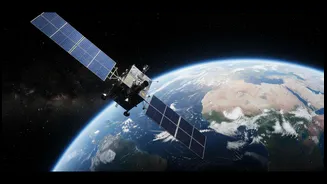
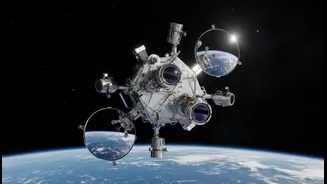
projections. They also play a crucial role in the modern technology we depend on. By forecasting the density of the upper atmosphere, these models help us predict the trajectory of satellites in low-Earth orbit, preventing collisions and ensuring that services like GPS and satellite communication remain stable. For decades, these models have been refined based on predictable inputs, but recent, powerful events on Earth's surface are introducing a new level of chaos.
When the Earth Breathes Fire
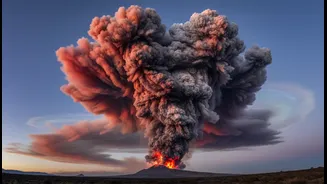
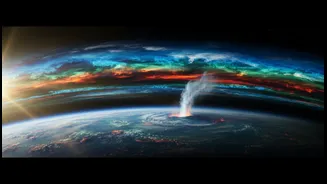
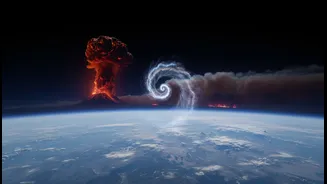
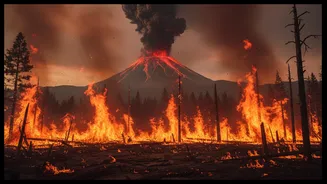
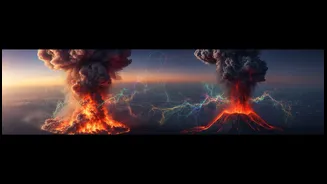
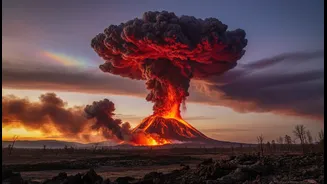
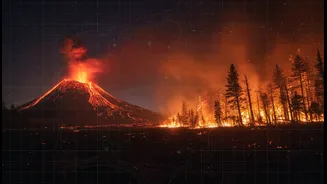
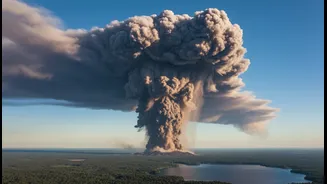
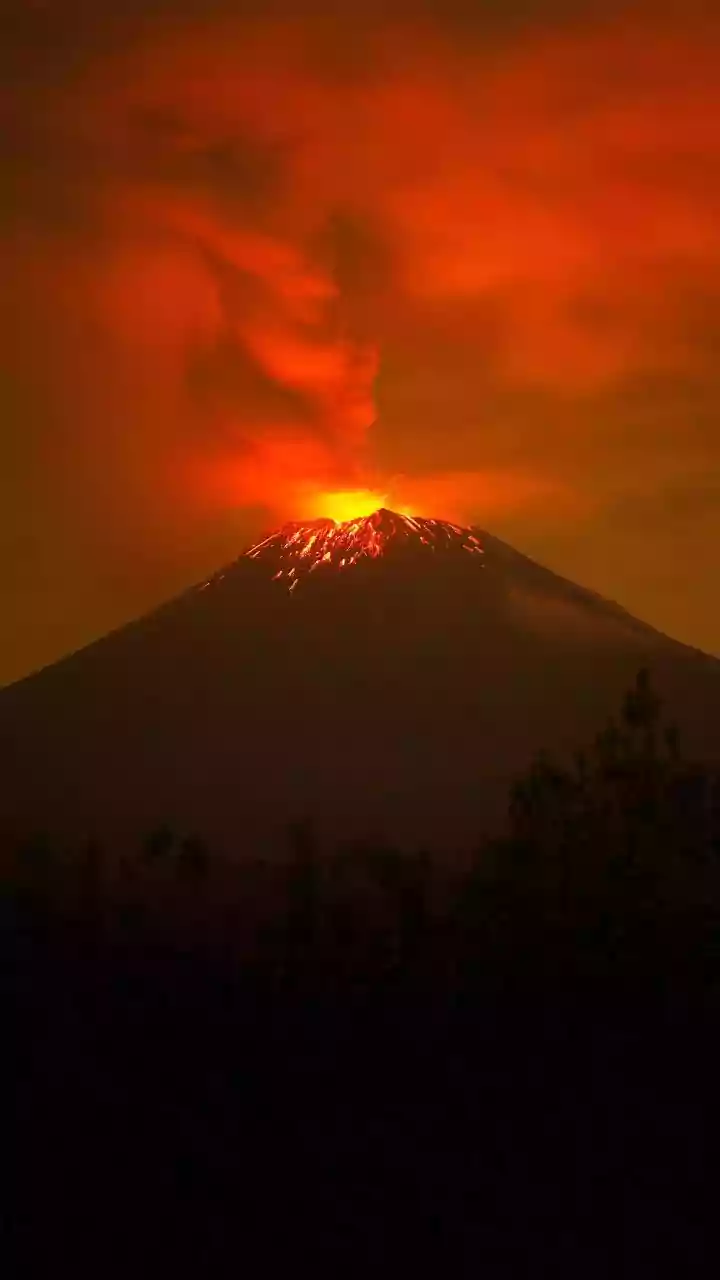
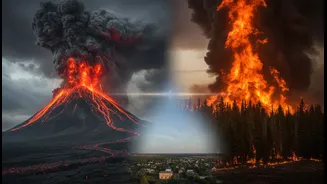
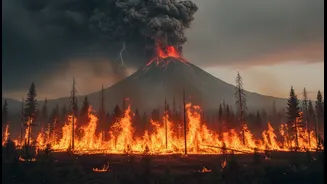
The problem begins with fire and rock. Increasingly intense wildfires are now creating their own weather systems, known as pyrocumulonimbus (pyroCb) thunderstorms. These powerful storms act like elevators, punching smoke, ash, and water vapor miles high into the stratosphere, a region typically undisturbed by surface weather. Similarly, major volcanic eruptions inject enormous clouds of sulfur dioxide and ash into this same layer. Scientists have discovered that the sheer scale and frequency of these events are having a much larger and longer-lasting impact than previously understood. The plume from a single pyroCb event, for instance, has been tracked circling the Northern Hemisphere for over eight months.
Rewriting the Chemistry of the Sky
Once in the stratosphere, these plumes don’t just sit there; they actively change the environment. Smoke particles, rich in black and brown carbon, are highly effective at absorbing sunlight. This absorption heats the surrounding atmosphere, altering temperature gradients that are fundamental to global circulation patterns. Volcanic aerosols, primarily composed of sulfate particles, have a different but equally disruptive effect, scattering sunlight back into space and causing a temporary cooling of the Earth's surface. Some recent studies on wildfires have also observed a cooling effect from larger-than-expected smoke particles not yet accounted for in most models. These sudden, massive injections of particles are creating atmospheric effects that current climate models, which often assume more constant conditions, are struggling to capture.
The Challenge for Our Models
Many of today's leading climate models, like the Whole Atmosphere Community Climate Model (WACCM), were not designed to account for such sporadic, massive injections of aerosols from the ground. These models often use historical averages for volcanic activity or don't fully represent the complex properties of wildfire smoke. Research has shown that models can systematically underestimate how clouds respond to these aerosol changes. The result is a growing discrepancy between what the models predict and what satellites observe. When a model doesn't account for a massive smoke plume heating the stratosphere, its calculations for air density become unreliable. This is a critical blind spot, as more frequent and intense wildfires mean this is no longer a rare anomaly but a significant factor in atmospheric composition.
Why Inaccurate Models Matter
The consequences of this modeling gap are tangible. For the thousands of satellites in low-Earth orbit, unpredictable changes in atmospheric density can alter their paths, increasing the risk of collisions and making their trajectories harder to predict. This has direct implications for the reliability of GPS navigation, global communications, and Earth observation systems. Furthermore, if models cannot accurately account for the heating or cooling effects of these massive plumes, our long-term climate projections become less certain. These events can influence major climate patterns like the El Niño-Southern Oscillation (ENSO), with ripple effects on weather systems worldwide. Understanding these impacts is crucial for creating effective climate mitigation and adaptation policies.