





Hazardous Air Grips North India
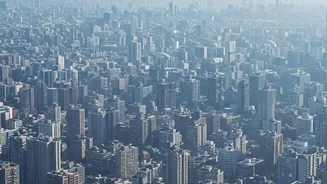
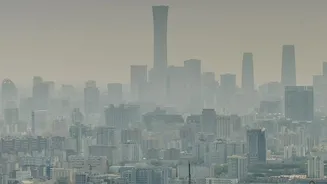
Recent reports from early November have painted a grim picture of the air quality in several north Indian cities, pushing them into the global spotlight for pollution. Rajasthan's Bikaner and Punjab's Bathinda have been particularly affected, with Air
Quality Index (AQI) readings recently soaring into the 'Severe' and 'Hazardous' categories. On November 4, some reports indicated Bikaner's AQI reached extraordinarily high levels, with Bathinda not far behind, ranking among the country's most polluted cities. These figures, often exceeding 500 on the AQI scale, signal a public health emergency where even healthy individuals can experience severe respiratory distress. The thick smog is a toxic cocktail of pollutants, but two culprits are consistently at the center of the crisis: PM10 and the even more dangerous PM2.5.
Understanding PM10: The Coarse Particles
When you hear about air pollution, PM10 is one of the most common terms used. The 'PM' stands for particulate matter, and the '10' refers to the size of the particles—10 micrometers or less in diameter. To put that into perspective, a single human hair is about 70 micrometers thick. These 'coarse' particles include things like dust from roads and construction sites, pollen, and mold spores. Because of their relatively larger size, most PM10 particles, when inhaled, get trapped in the upper respiratory tract—the nose, mouth, and throat. This can cause irritation, coughing, and worsen conditions like asthma. While they are a significant health concern, they are generally too large to penetrate deep into the lungs.
PM2.5: The Invisible, More Dangerous Threat
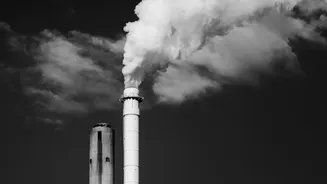
The '2.5' in PM2.5 refers to particles that are 2.5 micrometers or smaller in diameter—so fine that about 30 of them could fit across the width of a human hair. These fine particles are far more dangerous than their larger counterparts. Their sources are typically related to combustion: vehicle exhaust, industrial emissions, power plants, and smoke from stubble burning and wildfires. Because of their microscopic size, PM2.5 particles can bypass the body's natural defenses in the nose and throat and travel deep into the lungs. From there, they can even enter the bloodstream, circulating throughout the body and causing widespread inflammation and damage. This is why PM2.5 is linked to the most severe health outcomes, including heart attacks, strokes, chronic respiratory diseases, and even cancer.
Why The Difference Is Critical
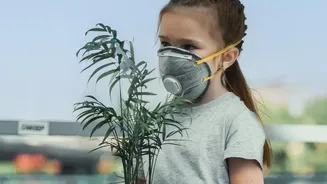
The distinction between PM10 and PM2.5 is crucial for understanding health risks. While an AQI report will include both, the concentration of PM2.5 is often the most critical indicator of air toxicity. All PM2.5 particles are also considered PM10, but not all PM10 particles are PM2.5. Think of it like a net; the PM10 measurement catches both large and small particles, while the PM2.5 measurement isolates only the finest, most harmful ones. During severe pollution events like those in Bikaner and Bathinda, the concentration of PM2.5 often skyrockets. This is what makes the air particularly dangerous, as these are the particles that can inflict long-term, systemic damage. Standard cloth or surgical masks are ineffective against these tiny particles; only certified N95 or N99 respirators can offer protection.
A Perfect Storm of Pollution
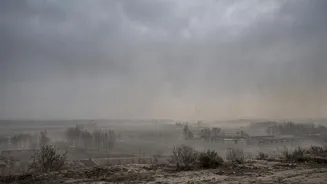
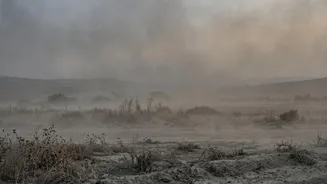
The extreme pollution levels in Bikaner and Bathinda are not accidental but the result of a 'perfect storm' of contributing factors. A major cause during this time of year is agricultural stubble burning in Punjab and Haryana, which releases massive volumes of smoke and PM2.5 into the atmosphere. This is compounded by local sources like vehicular emissions, industrial pollution, and dust from construction. The situation is made dramatically worse by winter weather conditions. Low wind speeds mean pollutants are not dispersed, while a phenomenon called temperature inversion traps a layer of cold, dense, polluted air close to the ground, preventing it from rising. The result is a thick, stagnant blanket of smog that chokes entire cities for days on end.