





The Rain-Forest Connection
A forest is not just a collection of trees; it is a complex ecosystem defined significantly by water. In India, the annual monsoon is the primary driver of this relationship. The amount, timing, and consistency of rainfall determine what kind of forest can thrive
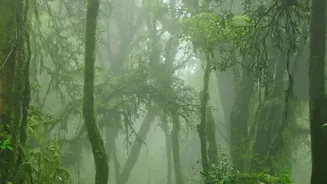
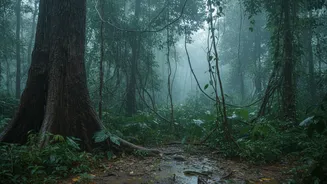
in a particular region. Tropical evergreen forests, like those in the Western Ghats and Northeast India, depend on heavy, consistent rainfall to maintain their lush canopy. In contrast, dry deciduous forests, which are widespread across central India, are adapted to long dry seasons, shedding their leaves to conserve moisture. The very character of these landscapes, from tropical rainforests to savanna-like woodlands, is a direct response to the water available. This delicate balance, however, is now under scrutiny as the climate itself begins to shift.
An Unpredictable Monsoon
The Indian monsoon is becoming more erratic. Research points to a clear trend: fewer rainy days but more intense downpours. This means that instead of a steady, soil-soaking drizzle over weeks, many regions are experiencing long dry spells punctuated by extreme rainfall events that can lead to floods and soil erosion. Furthermore, studies show a weakening of the overall summer monsoon, which is critical for recharging water sources across the subcontinent. Temperature is another key factor. Rising temperatures increase the risk of forest fires, especially in drier regions, and add another layer of stress on vegetation already struggling with unpredictable water availability.
Signs of a Shifting Landscape
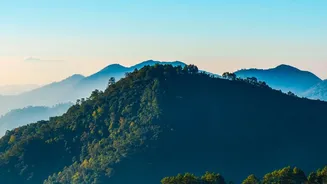
So, what are researchers actually seeing on the ground? Evidence suggests that changes are already underway. A long-term study in Madhya Pradesh's Panchmarhi Biosphere Reserve found that the reserve lost about 13% of its forest cover between 1972 and 2020, with shifts in rainfall and rising temperatures being significant drivers alongside human pressures. Dry teak forests in the reserve were particularly vulnerable, showing the highest loss in canopy cover. In the Himalayas, warming temperatures are causing vegetation to shift to higher altitudes. Studies have projected that large portions of India's forests, potentially over two-thirds in some scenarios, are likely to undergo changes in vegetation type by the end of the century. Some models even suggest a potential transition from forest to more savanna-like ecosystems in areas where rainfall becomes more variable.
The Domino Effect
These changes aren't just an abstract concern for botanists; they have profound real-world consequences. A shift in forest type can lead to a loss of biodiversity, as species adapted to one type of habitat may not survive in another. For example, a shift from moist deciduous forests to drier types could threaten species that rely on higher moisture levels. This also has a direct human impact. Forest-dependent communities, including many Adivasi populations, rely on specific forest products for their livelihoods, which could be jeopardised by these ecological shifts. Furthermore, forests play a crucial role in the water cycle itself. Deforestation can reduce local rainfall, as less moisture is returned to the atmosphere through evapotranspiration, potentially creating a feedback loop that exacerbates drying conditions.