



Who, or What, is Vyommitra?
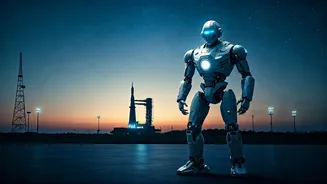
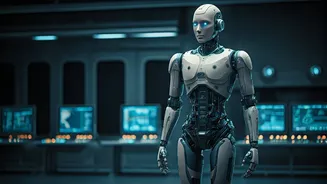
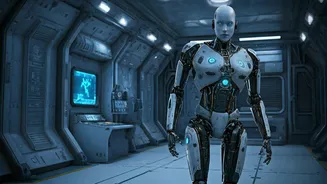
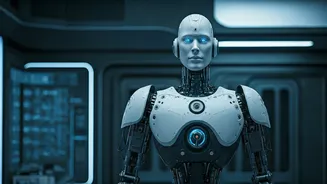
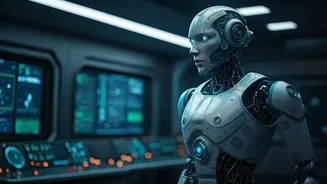
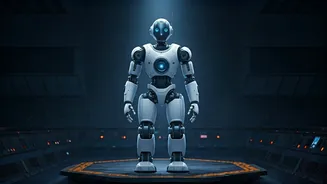
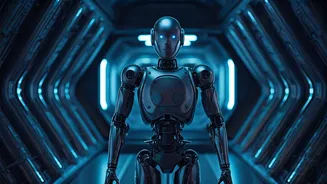
Vyommitra, whose name combines the Sanskrit words 'Vyoma' (Space) and 'Mitra' (Friend), is a highly advanced humanoid robot developed by the Indian Space Research Organisation (ISRO). Unveiled in 2020, she is designed to look and act as a human counterpart
in space. Though she is a 'half-humanoid' — meaning she has a torso and head but no legs — she is equipped with a sophisticated set of skills. Vyommitra can speak both Hindi and English, recognise and interact with astronauts, and operate the switch panels inside the crew module. Her purpose is to be a pioneer, a robotic test pilot who will fly on uncrewed Gaganyaan missions to ensure every system is perfectly safe for the human crew that will follow.
The Ultimate Safety Test
Before sending humans into orbit for the first time, ISRO needs to be certain that the Gaganyaan spacecraft can sustain life and handle any contingency. This is where Vyommitra plays her most critical role. Onboard the uncrewed G1 mission, she will act as a proxy for the astronauts. Her sensors will monitor crucial cabin parameters like temperature, pressure, and oxygen levels. She will simulate human functions, allowing ground control to understand how the spacecraft's life support systems perform under realistic conditions. Vyommitra will operate switches, follow procedures, and even provide warnings if environmental parameters change. In essence, she is the ultimate crash test dummy, but one with the intelligence to actively test the vehicle from the inside and report back on its performance. Her flight is a non-negotiable step in validating the safety of the entire system.
Why is She in the News Now?
The reason Vyommitra has re-entered the national conversation is because the Gaganyaan program is entering its final and most decisive phase. Recent updates from ISRO confirm that preparations for the first uncrewed mission, designated G1, are in full swing. According to reports from June 2026, the pre-flight integration process for Vyommitra with the crew module is underway, and the launch campaign for the G1 mission has begun. This mission is slated for the second half of 2026. Engineers are meticulously integrating the robot with the spacecraft's onboard systems to ensure seamless communication and response simulations during the flight. This flurry of activity signals that after years of development and ground tests, Vyommitra is finally on the verge of her maiden space journey, moving the entire Gaganyaan project closer to its ultimate goal.
Gearing Up for a Historic Launch
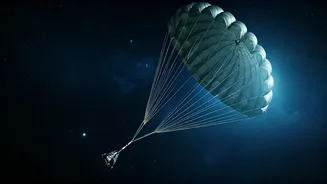
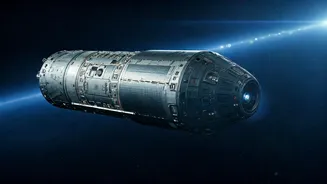
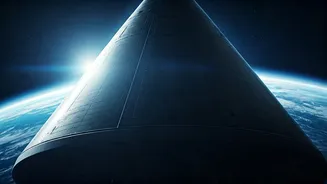
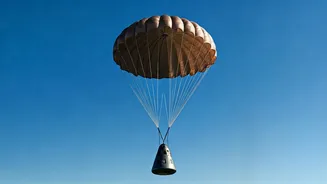
The G1 mission will see Vyommitra launched atop the Human Rated Launch Vehicle (HRLV), a modified and more reliable version of India's powerful LVM3 rocket, from the Satish Dhawan Space Centre. The mission will test the entire sequence of events, from the launch and orbital manoeuvres to the fiery re-entry and splashdown recovery of the crew module. Following Vyommitra's flight, ISRO plans at least one more uncrewed test flight before the first crewed mission, H1, which is now targeted for 2027. That historic flight will carry three Indian astronauts into an orbit of 400 kilometres for up to a week. By completing these uncrewed flights first, ISRO is following a globally accepted standard of prioritising safety above all else in human spaceflight.
A Symbol of India's Ambition
Vyommitra is far more than just a piece of hardware; she is a powerful symbol of India's growing technological prowess and its meticulous approach to space exploration. While other nations have used animals for initial test flights, ISRO's decision to use a humanoid robot aims to gather more precise data on how a craft's systems respond to human-like interaction. She represents a bridge between robotics, artificial intelligence, and human spaceflight, showcasing the multidisciplinary strength of India's scientific community. As Vyommitra prepares for her journey, she carries the hopes of a nation, paving the way for Indian astronauts to safely venture into the final frontier and solidify India's place among the world's leading spacefaring nations.