



An Accidental Opportunity
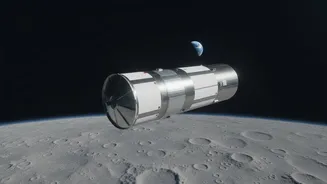
A spent upper stage of a Falcon 9 rocket that launched in January 2025 is set to slam into the Moon today at over 8,700 kilometres per hour. The rocket successfully completed its primary mission, which involved deploying two lunar landers. Afterwards,
the four-tonne, bus-sized stage was left in a chaotic orbit. Gravitational forces and solar activity eventually nudged the space debris onto a path that guaranteed a lunar impact. While the collision itself was not originally intended by SpaceX, scientists quickly recognized the event as a golden opportunity for research and have planned extensive observations.
The Science of a Smash
So, how does crashing a rocket into the Moon help science? The main goal is to study the plume of debris, or 'ejecta', that gets blasted from the surface. This material, excavated from beneath the Moon's top layer, provides a sample of the lunar subsurface that is otherwise inaccessible. By analyzing the light from this plume, scientists can determine its composition. They are particularly interested in searching for signs of water ice, which is thought to be trapped in permanently shadowed regions but might also exist in smaller quantities elsewhere. This method was famously used in 2009 when NASA's LCROSS mission intentionally crashed a probe into the Moon, confirming the presence of water.
Eyes on the Sky
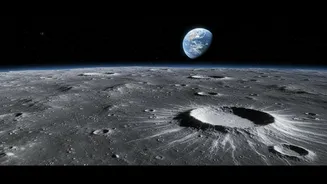
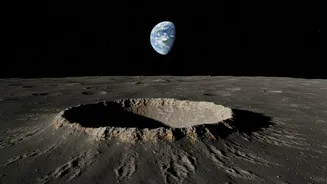
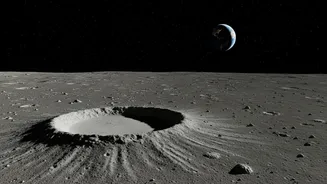
Although the impact itself will happen on the sunlit side of the Moon and won't be visible to the naked eye, a network of observatories and spacecraft are poised to watch the show. Ground-based telescopes are attempting to capture the ejecta plume as it rises above the lunar surface. In orbit, NASA's Lunar Reconnaissance Orbiter (LRO) and South Korea's Danuri spacecraft will play a crucial role. Their mission is to take high-resolution before-and-after images of the impact site. These images will allow scientists to study the new crater, which is expected to be about 60 feet wide, and analyse how the lunar soil, or regolith, was disturbed.
Learning from the Crater
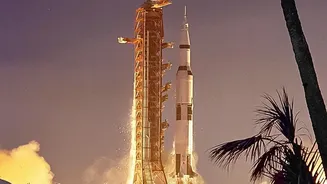
Creating a new crater of a known size and energy provides invaluable data for lunar geologists. During the Apollo era, NASA deliberately crashed Saturn V rocket stages into the Moon to create small, measurable moonquakes that were detected by seismometers left on the surface. While there are no active seismometers in the impact area today, studying the shape and size of the new crater reveals information about the surface properties, such as its strength and composition. The collision is expected to leave a crater up to 89 feet wide, giving scientists fresh insight into how impacts shape the lunar landscape.
A Messy but Valuable Experiment
The event also raises important questions about space debris. As more missions head to the Moon, the number of spent rocket stages and defunct spacecraft will increase. This particular impact, while scientifically useful, highlights the need for clear international guidelines on the disposal of space hardware. For now, however, the scientific community is making the most of the situation. This unplanned impact provides data that helps refine models for future exploration, understand hazards from natural meteoroid strikes, and unlock more secrets hidden within the Moon's ancient geology.