



A New Eye on the Cosmos
Imagine trying to take a panoramic photo of a sprawling landscape, but you only have the lens from a microscope. That’s been one of the challenges for astronomers using powerful but narrowly focused telescopes like the Hubble and James Webb Space Telescope
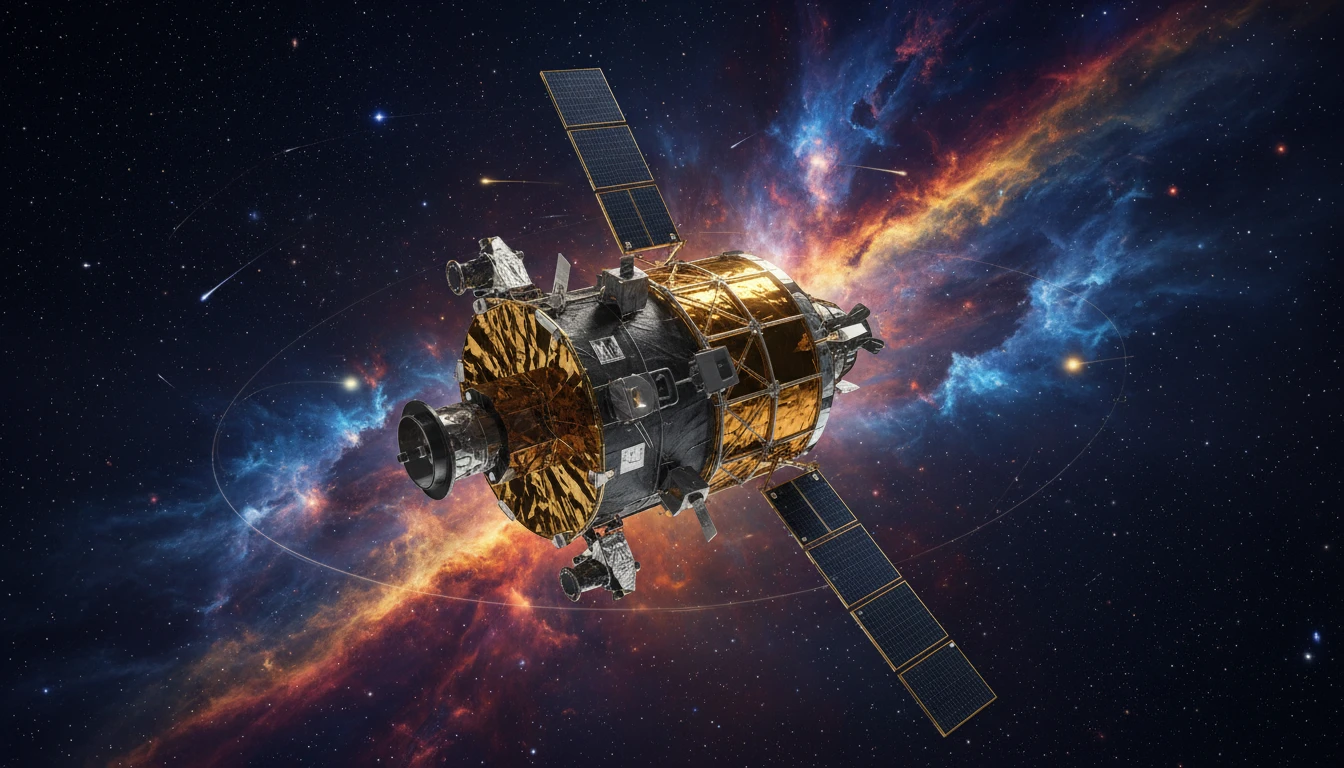
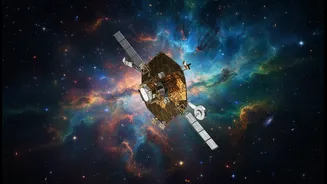
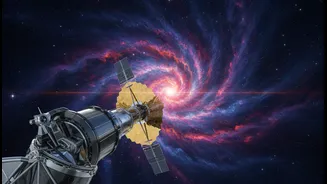
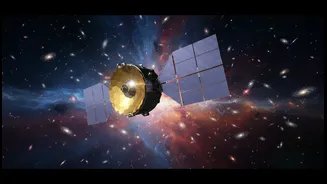
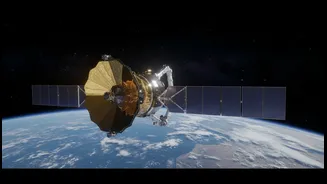
(JWST). While those observatories provide breathtakingly deep and detailed views of small patches of the sky, NASA's next flagship mission, the Nancy Grace Roman Space Telescope, is built for the big picture. Named after NASA's first chief of astronomy, Nancy Grace Roman, this observatory shares Hubble's mirror size but boasts a field of view 100 to 200 times larger. This vast perspective will allow it to map the sky up to 1,000 times faster than Hubble, generating unprecedented large-scale maps of the universe. Scheduled to launch aboard a SpaceX Falcon Heavy rocket on August 30, 2026, Roman is heading to a stable orbit one million miles from Earth, ready for its five-year primary mission.
Illuminating the Dark Universe
One of Roman’s primary targets is a force that makes up about 68% of the cosmos, yet remains completely enigmatic: dark energy. This is the mysterious pressure causing the expansion of the universe to accelerate, a discovery that challenged our fundamental understanding of physics. Roman will investigate dark energy using multiple methods. It will conduct a massive survey of over a billion galaxies to map how matter is structured across the cosmos and how that structure has changed over time. It will also hunt for thousands of Type Ia supernovae—exploding stars with a standardized brightness that allows them to be used as cosmic distance markers. By measuring these supernovae at greater distances than ever before, scientists can chart the universe's expansion history with incredible precision and determine how the influence of dark energy has evolved. These observations will help test whether dark energy is a constant force or something that has changed over cosmic history, and could even test the limits of Einstein's theory of general relativity.
A Galactic Planet Census
Beyond the grand cosmic scale, Roman will also revolutionize the hunt for exoplanets, worlds orbiting other stars. Its main technique will be gravitational microlensing. This phenomenon, predicted by Einstein, occurs when a star or planet passes in front of a more distant star, causing the background star's light to be briefly magnified by the foreground object's gravity. Microlensing is sensitive enough to find planets down to just a few times the mass of the Moon, including free-floating 'rogue' planets that don't orbit a star at all. Roman's Galactic Bulge Time-Domain Survey is expected to discover thousands of new exoplanets, providing a robust census of worlds in the outer regions of solar systems, which will complement the discoveries of missions like Kepler and TESS that specialized in finding planets close to their stars. This will give scientists a much clearer idea of how common solar systems like our own really are.
More Than Just Two Goals
While dark energy and exoplanets are the headline acts, Roman's capabilities will open the door to a vast range of other discoveries. Its Wide Field Instrument will enable a suite of general astrophysics surveys, and the data will be made public immediately, allowing the entire scientific community to mine it for new findings. Recent research suggests Roman will be a powerful tool for finding and studying supermassive black holes deep in the universe's past by spotting the bright flares from tidal disruption events, which occur when a black hole tears a star apart. The telescope will also be a key instrument for mapping dark matter, the invisible substance that provides the gravitational scaffolding for galaxies. In addition, Roman carries a technology demonstrator called the Coronagraph Instrument. This tool is designed to block the overwhelming glare of a star to directly image the planets orbiting it, a crucial step toward future missions that will search for signs of life in the atmospheres of Earth-like worlds.