



A Monsoon of Two Halves
The 2026 southwest monsoon has been a story of sharp contrasts. After a sluggish start in June, a significant revival in July helped farmers catch up on planting, narrowing the sowing deficit. However, the India Meteorological Department (IMD) has issued
a cautious outlook for the second half of the season. Forecasts released at the end of July indicate that rainfall in August and September is likely to be below normal—less than 94% of the Long Period Average (LPA) for most of the country. This is attributed to the strengthening of El Niño conditions, a weather pattern historically associated with weaker monsoons in India. This forecast puts a sharp focus on the water available to the newly sown crops, which are entering a critical growth phase.
From Forecast to Field Reality
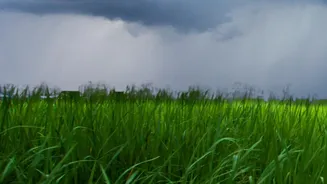
For farmers, national averages and long-range predictions now take a backseat to what is happening in their own fields and villages. The distribution of rain in July was already uneven, with many districts recording deficient rainfall even as the national average improved. This unevenness is the key challenge for August. A standing crop in its vegetative stage requires consistent moisture to thrive. After sowing, the focus shifts from the quantity of rain to its timeliness and distribution. A few heavy downpours are less effective than steady, intermittent showers that allow the soil to absorb moisture without causing erosion or waterlogging. The IMD has noted that while the overall outlook is below normal, some parts of eastern peninsular India, and select areas in northwest and central India, might still receive normal to above-normal rain.
What Farmers Should Be Watching
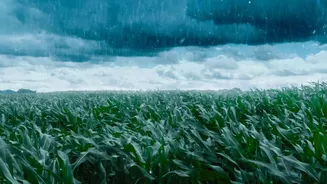
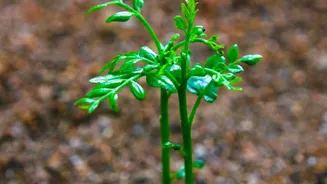
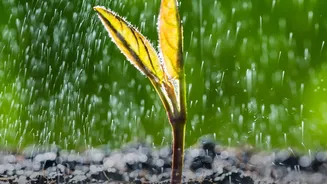
The post-sowing period is a critical time for germination and early plant growth. Insufficient rainfall can lead to moisture stress, where the plant does not have enough water for basic physiological functions, resulting in wilting and poor growth. Conversely, excessive rainfall can be just as damaging. It can lead to waterlogged fields, which suffocates the roots, leaches essential nutrients from the soil, and creates favorable conditions for fungal diseases and pests. Farmers must walk their fields regularly, observing the soil's texture and the health of the young saplings. Are the leaves a healthy green, or are they showing signs of yellowing or drooping? Is the soil cracked and dry, or is there standing water in low-lying areas? These visual cues are the most immediate and reliable indicators of crop health.
An Action Plan for Uncertain Rains
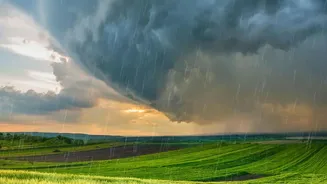
Vigilance must be paired with action. In regions facing a dry spell, the priority is water conservation. Farmers should focus on reinforcing bunds around their fields to capture every drop of rain that does fall. Mulching, the practice of covering the soil with organic material like straw or crop residue, can significantly reduce evaporation and keep the soil moist for longer. In contrast, in areas at risk of heavy showers, ensuring proper drainage is paramount. Clearing out field channels and creating pathways for excess water to flow away can prevent waterlogging and save the crop from root rot. The coming weeks will be crucial, as the performance of the monsoon in August and September directly impacts crop growth, yields, and ultimately, food inflation.
Leveraging Modern Tools and Local Knowledge
While traditional wisdom remains invaluable, modern technology offers powerful tools for managing risk. Numerous mobile applications and services now provide localized, short-term weather forecasts that are far more specific than regional outlooks. These can help farmers make informed decisions about irrigation, pesticide application, and other crucial activities. The IMD also provides district-level advisories. By combining these modern resources with on-the-ground observation, farmers can navigate the uncertainties of a tricky monsoon season. The goal is to bridge the gap between the broad atmospheric patterns and the micro-climate of a single farm, ensuring that the hard work of sowing has the best possible chance to translate into a bountiful harvest.