








The Promise of a Digital Guide
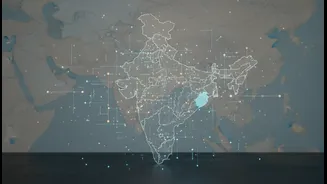
Imagine exploring the ancient temples of Tirupati or the serene beaches of Visakhapatnam, guided by an AI companion on your phone. This is the future Andhra Pradesh Tourism is building. In a partnership with travel-tech company Explurger, the state is rolling
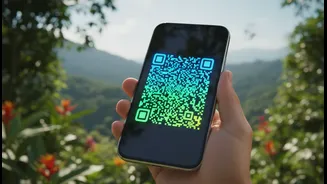
out the NiVU AI platform across more than 100 tourist destinations. By scanning a QR code, visitors can interact with an AI guide in over 130 languages via voice or text, receiving information about a site's history, significance, and nearby attractions without needing to download an app. The initiative, part of the 'Swarna Andhra Vision-2047', aims to make travel more accessible and informative for a global audience. After a successful pilot in Mangalagiri, the platform is being deployed in phases, promising a seamless blend of heritage and technology.
Beyond Simple Translation
The ambition to support over 130 languages is impressive, but this is where the first major risk appears. True multilingual support is far more complex than direct word-for-word translation. India’s linguistic landscape is a tapestry of dialects, code-switching (mixing English and local languages), and regional idioms. An AI might translate a query in standard Telugu, but could struggle with the specific dialects spoken across different parts of Andhra Pradesh. Furthermore, AI models trained on limited or low-quality datasets for Indian languages often produce robotic or inaccurate translations that miss the mark. These systems can fail to grasp context, leading to frustrating and even nonsensical interactions for tourists seeking genuine information.
The Peril of Cultural Blind Spots
Even more critical than linguistic accuracy is cultural nuance, an area where AI frequently fails. An AI is not a local guide who understands the unspoken rules and rhythms of a place. For example, could the AI distinguish between a casual eatery and a place that serves food considered inappropriate near a sacred pilgrimage site? Could it explain the subtle difference between various temple rituals or the cultural significance of a local festival beyond a dry, encyclopedic description? Without a deep, human-curated understanding, an AI risks becoming a tool for misinformation. It might flatten the rich, diverse sub-cultures within Andhra Pradesh into a single, stereotyped version, disrespecting local customs and providing a superficial experience for travellers.
The Data and Human Dilemma
An AI is only as good as the data it's trained on. For many Indian languages, high-quality, digitized datasets are scarce compared to English. This data scarcity is the primary bottleneck for developing truly effective regional AI. If the platform relies on generic web data, it risks inheriting biases and inaccuracies. To succeed, the AP tourism AI cannot be a 'fire-and-forget' technology. The state's tourism minister has praised the AI's accuracy in Telugu, which is a positive start. However, ensuring this quality across dozens of languages and cultural contexts requires continuous investment in human oversight. The real solution involves a 'human-in-the-loop' approach, where local historians, cultural experts, linguists, and community members are constantly involved in vetting, correcting, and enriching the AI's knowledge base. A separate project in AP, Mahul Vani AI, designed for tribal communities, exemplifies this approach by training its model on local knowledge systems.