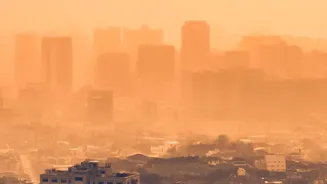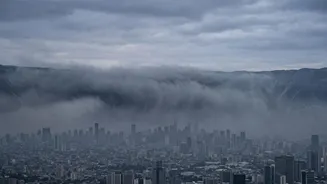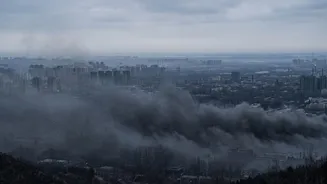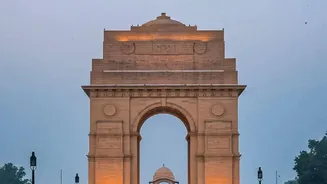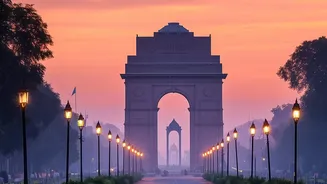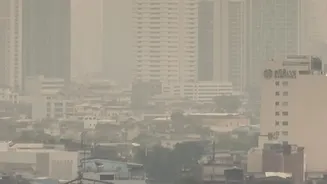







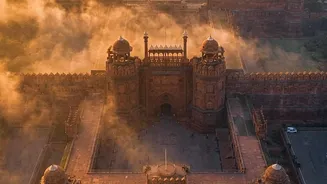
As November arrives, a familiar grey haze descends upon Delhi-NCR, turning the sky a murky brown and making throats itch. It's an annual event, but why is this month so bad? The answer lies in a perfect storm of weather and pollution.
An Annual Affliction
The first fortnight
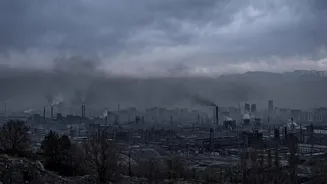
of November is consistently the most polluted period of the year for the Delhi-NCR region. As of November 2, 2026, air quality has already plunged into the 'Very Poor' and 'Hazardous' categories, with some real-time AQI readings crossing the 500-mark. While year-round pollution from traffic, industry, and construction dust is a constant problem, the situation escalates dramatically with the onset of winter. This isn't a coincidence; it's a predictable crisis driven by a convergence of man-made emissions and specific meteorological conditions that are hallmarks of the season. The problem isn't just that more pollutants are being produced, but that the weather itself prevents them from escaping.
The Science of the Winter 'Lid'
The single biggest meteorological factor is a phenomenon called 'temperature inversion'. Normally, the sun warms the ground, which in turn warms the layer of air closest to it. This warm air rises, carrying pollutants up and away into the atmosphere. In winter, however, this process flips. The ground cools down rapidly, especially overnight, making the air near the surface colder and denser than the layer of air above it. This warmer air acts like an atmospheric lid, trapping the cold, heavy air—and all the pollutants within it—close to the ground. The mixing height, or the altitude to which pollutants can normally disperse, shrinks dramatically from about a kilometre in summer to just a few hundred meters, concentrating pollution in the air we breathe.
When the Wind Stops Blowing
The second key driver is the decrease in wind speed. During the post-monsoon and early winter months, the Delhi region frequently experiences calm or slow-moving winds. This lack of wind creates stagnant atmospheric conditions. The invisible 'lid' from the temperature inversion traps the pollution, and the absence of strong winds means this toxic cocktail of emissions has nowhere to go. It simply accumulates, with pollution levels building day after day. The landlocked geography of the Indo-Gangetic plain, bounded by the Himalayas, further exacerbates this by creating a natural bowl effect that traps air. This combination turns the entire region into a veritable gas chamber, where pollutants from across the area are unable to disperse.
Adding Fuel to the Fire
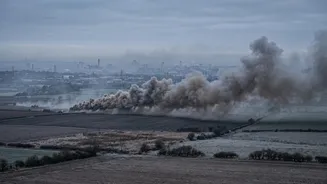
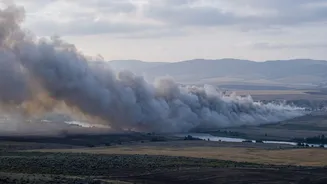
These weather conditions wouldn't be so devastating without the massive influx of seasonal pollutants. The period from October to November coincides with the peak of stubble burning in the neighbouring states of Punjab and Haryana, where farmers burn crop residue after the harvest. On some days, smoke from these farm fires can contribute significantly to Delhi's hazardous PM2.5 levels. While there is debate about its exact percentage contribution compared to local sources like vehicular emissions and industrial pollution, there is no doubt that this huge volume of smoke, arriving just as the weather turns hostile, is a major trigger for the severe smog episodes. It is the final ingredient in a recipe for disaster, overwhelming an atmosphere that has already lost its ability to clean itself.