



Preparing Your Saree and Tools
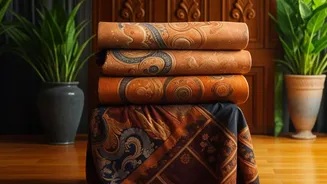
Before you begin cutting, it's essential to prepare your silk saree. If the fabric is washable, pre-wash it gently by hand to prevent any future shrinkage. Iron it on a low heat setting, preferably with a press cloth, to get a smooth, wrinkle-free surface.
Silk can be slippery, so having the right tools is key. Use a sharp rotary cutter or dedicated fabric scissors for clean cuts. Fine, sharp needles (like a Microtex 60/8 or 70/10) and silk pins will prevent snagging the delicate fibres. For backing, choose a sturdy plain fabric like cotton, which will add durability to your finished items, especially if the saree silk is thin.
Crafting Elegant Cushion Covers
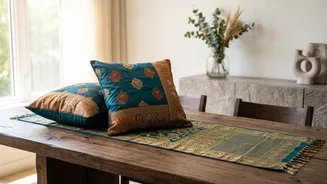
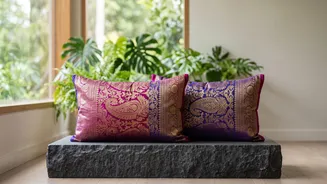
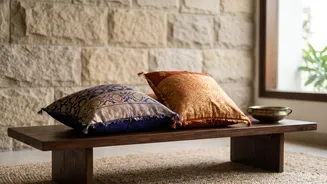
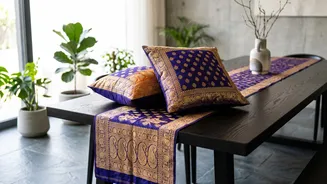
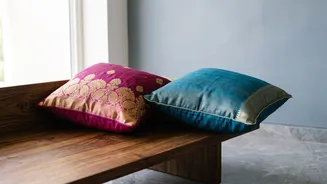
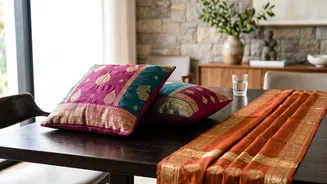
Cushion covers are one of the easiest ways to start. The rich pallu or an intricate border is perfect for the front panel. To create a standard 16x16 inch cover, cut a 17x17 inch square from your saree, allowing for a half-inch seam on all sides. For the back, you can create an envelope closure. Cut one piece of your backing fabric at 17x17 inches and another at 17x12 inches. Hem one of the 17-inch edges on each back piece. Now, place your silk panel right-side up. Lay the larger back piece on top, right-side down, aligning the raw edges. Then, lay the smaller back piece on the other side, also right-side down, so the two hemmed edges overlap in the middle. Pin everything in place and stitch around all four sides. Trim the corners, turn the cover right-side out, and you have a beautiful new cushion cover ready for an insert.
Designing a Festive Table Runner
A table runner can instantly elevate your dining space. The length and borders of a saree are naturally suited for this project. First, measure your table and decide on the final dimensions; a good rule is for the runner to be about one-third the width of your table and hang over each end by about 6-12 inches. Cut a long panel from the main body of the saree to your desired length and width, plus seam allowance. An old saree's border can be cut and stitched along the long edges for a professional finish. For extra weight and stability, it's a good idea to add a lining. Simply cut your backing fabric to the same size as your silk panel. Place the two pieces right-sides together, stitch around the perimeter, but leave a small gap for turning. Turn the runner right-side out, press it flat, and stitch the gap closed.
Simple No-Sew Alternatives
If sewing isn't your strong suit, you can still achieve beautiful results. For no-sew cushion covers, you can use fusible webbing (iron-on hem tape) to seal the edges. Another trick is to use an existing plain cushion cover as a base. Simply wrap a beautiful section of the saree around it, folding the fabric neatly at the back like you're wrapping a present, and secure it with safety pins or a few discreet stitches. For a table runner, you can cut a clean, long strip of the saree and use fusible webbing to create neat, crisp hems along the edges, preventing the silk from fraying. A strong fabric glue can also be used to attach decorative borders or backing fabric.
Adding Final Festive Flourishes
To make your creations truly stand out for the festive season, consider adding embellishments. Tassels, beads, or small bells can be hand-stitched onto the corners of your cushion covers for a playful, decorative touch. You can also use leftover border pieces to create matching fabric trims for other items. For your table runner, consider attaching heavier tassels or beads to the short ends to help it hang beautifully. These small details tie the look together and give your handcrafted items a polished, high-end feel, turning memories into modern heirlooms that will brighten your home for years to come.