


Understanding the Invisible Danger
The term cross-contact is often confused with cross-contamination, but they are critically different. Cross-contamination involves the transfer of harmful bacteria or viruses, which can often be neutralized by cooking. Cross-contact, however, is the transfer of a food
protein (an allergen) from one food or surface to another. Think of a knife used to spread peanut butter being quickly wiped and then used to slice an apple. Even unseen protein residue can be enough to trigger a severe allergic reaction. Unlike bacteria, cooking does not eliminate or reduce the risk from an allergen protein. This makes prevention, not just cooking, the only reliable strategy for safety.
The Separate Basin Method
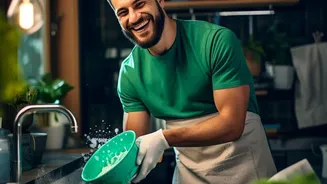
One of the most effective strategies to prevent cross-contact is physical separation. This starts at the sink. For households managing food allergies, dedicating a separate basin for washing all allergy-safe items is a simple and powerful tool. This doesn't necessarily mean you need a double sink. A sturdy, distinct plastic wash basin that fits inside your main sink can be used exclusively for the allergy-safe dishes, utensils, and cutting boards. This designated basin should be paired with its own dedicated sponge or brush and drying towel to prevent any transfer from other items being washed. The key is to create a self-contained, safe cleaning zone, eliminating any chance that water or residue from other dishes could splash onto and re-contaminate the safe items.
Mastering the Cleaning Sequence
If a separate basin isn't practical, a strict and careful cleaning sequence is the next best line of defence. The golden rule is simple: prepare and clean for the person with the food allergy first. Cook the allergy-safe meal before other family meals, using clean utensils and surfaces. When it comes to cleanup, wash the allergen-free pots, pans, and plates first, using fresh, hot, soapy water. After these items are washed, rinsed, and safely put away to dry, you can then proceed to wash the rest of the household's dishes. This order of operations ensures that the tools and water used for the safe items are free from any allergenic proteins. Thorough washing with soap and hot water is effective at removing food proteins; hand sanitizers are not.
Extending Safety Beyond the Sink
While washing is crucial, cross-contact can happen anywhere in the kitchen. Extend the principle of separation to other tools and surfaces. Use separate, often colour-coded, cutting boards and utensils for preparing allergen-free foods. Purple is a colour commonly used in commercial kitchens to designate allergen-safe equipment. Store these items in a dedicated cabinet or drawer to prevent mix-ups. Be mindful of porous surfaces like wood, as allergens can be harder to remove from them compared to stainless steel. Regular hand washing with soap and water, especially between handling different ingredients, is also a non-negotiable step in preventing accidental exposure.
Beware of Hidden Cross-Contact Hotspots
Some of the biggest risks come from sources we don't often consider. Shared condiment jars are a common problem; using a knife to get peanut butter and then dipping it into the jam jar is a classic example of cross-contact. Shared toasters can be filled with crumbs from regular bread, posing a risk for someone with a wheat allergy or celiac disease. Even frying oil can become a vehicle for allergens if you cook, for example, shrimp and then French fries in the same oil. Being aware of these less obvious transfer points is just as important as the more apparent cleaning routines. The safest approach is often to have separate, clearly labelled condiments and appliances when managing a severe food allergy.