








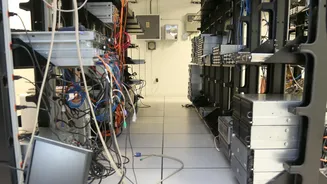
India is in the midst of a digital revolution, powered by a massive expansion of data centres. But these silent engines of the digital economy have an insatiable appetite for electricity, creating a critical bottleneck for future growth.
A Digital Tsunami of Growth
India's data centre
market is experiencing explosive growth, transitioning from a niche sector into a cornerstone of the nation's digital infrastructure. Fueled by the rise of artificial intelligence, enterprise digitalisation, and massive data consumption, the country's operational data centre capacity is projected to surge dramatically. Forecasts indicate that capacity could grow from around 1.8 GW in 2026 to between 7.5 GW and 12 GW by 2030, attracting trillions of rupees in investment. This expansion is not just about building more server racks; it involves creating vast, power-hungry campuses. Global hyperscalers and domestic operators are committing billions, with major hubs concentrated in Mumbai, Chennai, Hyderabad, and Visakhapatnam. This build-out is essential for supporting everything from UPI transactions and cloud computing to the next generation of AI services that are becoming integral to the economy.
The Unquenchable Thirst for Power
Data centres are among the most energy-intensive facilities in the world. They require a constant, high-quality power supply not only for the servers processing vast amounts of data but also for the extensive cooling systems needed to prevent them from overheating. The advent of AI has magnified this demand exponentially. AI workloads, which rely on powerful Graphics Processing Units (GPUs), can cause individual server racks to consume 80-150 KW, compared to just 15-20 KW for traditional servers. Consequently, the electricity demand from India's data centres is forecast to grow significantly, potentially accounting for as much as 7% of the country's total electricity demand by 2040. In some cities, the projected power load of data centres by 2030 could be equivalent to a staggering 60-80% of their current peak electricity demand, highlighting the immense pressure being placed on local power infrastructure.
The Grid's Great Bottleneck
The primary challenge facing this expansion is not a lack of investor interest, but the physical limitations of India's power grid. Data centre operators frequently face significant delays in securing high-voltage connections from state-level distribution companies (DISCOMs). The timeline for building a data centre is often much shorter than that for upgrading power transmission lines and substations, creating a critical mismatch. Furthermore, grid stability is a major concern. Data centres require uninterrupted power, but fluctuations and outages can risk service disruptions. The highly variable nature of AI workloads, which can cause sudden spikes in power consumption, adds another layer of complexity for grid operators trying to maintain balance. In densely populated urban areas, where many data centres are clustered, issues with right-of-way can also delay the necessary upgrades to transmission capacity.
The Hunt for Sustainable Solutions
In response to these challenges, the industry is pursuing a multi-pronged strategy to secure reliable and sustainable power. Many data centre operators are moving away from complete reliance on the public grid. They are increasingly entering into long term Power Purchase Agreements (PPAs) directly with renewable energy producers to ensure a steady supply of clean energy. Captive and group captive power models, where a company generates its own power or pools resources with others, are also gaining traction. This shift is driven by both the need for reliability and the sustainability commitments of global tech giants, who are major clients. Additionally, there is a strong focus on energy efficiency, measured by Power Usage Effectiveness (PUE), with new Indian facilities adopting advanced cooling technologies to reduce waste. Some state governments are encouraging this transition by offering incentives for data centres that source a significant portion of their energy from renewables.