


The Making of a Sweetener
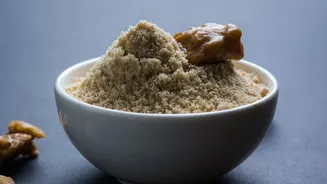
The fundamental difference between jaggery and white sugar lies in their processing. Jaggery is produced by boiling raw sugarcane juice until it solidifies. Because it is unrefined, it retains the molasses, which is a nutrient-rich byproduct of the sugar-making
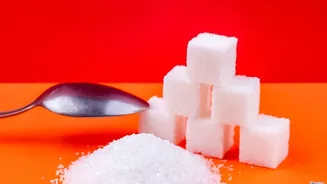
process. This gives jaggery its characteristic brown colour and a more complex flavour. White sugar, on the other hand, undergoes intensive refining. The process strips away the molasses and all accompanying minerals and vitamins, leaving behind pure, crystalline sucrose. This is why white sugar is often referred to as providing 'empty calories'—it offers energy with virtually no other nutritional benefits.
A Nutritional Face-Off
On the surface, jaggery appears to be the clear winner. While white sugar is 99.7% sucrose, jaggery's sucrose content is lower, ranging from 65-85%. The remaining part consists of water, other sugars like fructose and glucose, and, most importantly, minerals. Jaggery contains trace amounts of iron, magnesium, potassium, and calcium, nutrients that are entirely absent in its refined counterpart. However, it's crucial to look at this in the context of serving size. Calorically, both are nearly identical, with 100 grams of jaggery providing around 383 calories and white sugar providing 387. To get a significant amount of minerals from jaggery, you would need to consume a large quantity, at which point the high sugar intake would negate any potential benefits.
The Winter 'Warming' Effect: Fact or Folklore?
In India, jaggery is a winter staple, traditionally believed to have a 'warming' effect on the body. There is some logic to this belief. The body uses energy to metabolise food, a process that generates heat. Since jaggery is a quick source of energy, it can fuel this process. Furthermore, its mineral content is thought to help boost immunity and combat common winter ailments like coughs and colds. While not a magical heat source, consuming jaggery can provide a quick energy boost that helps the body stay warm and active during colder months.
The Impact on Blood Sugar
This is where the 'healthy' image of jaggery gets complicated. A common misconception is that jaggery is safer for people with diabetes. However, sugarcane jaggery has a high Glycemic Index (GI) of around 84, which is even higher than that of white sugar (around 65). This means it can cause a faster and sharper spike in blood sugar levels. Neither sweetener is recommended in significant amounts for individuals managing diabetes or insulin resistance. The idea that jaggery is a 'diabetic-friendly' sugar is a dangerous myth.
The Verdict: Moderation Over Substitution
So, is jaggery better than sugar? Marginally, yes. It is less processed and contains a few extra nutrients. But it is not a health food. The primary message, as the headline suggests, is that portion size is the real determinant of health. Overconsumption of either sweetener will lead to the same negative outcomes: weight gain, increased risk of heart disease, and dental issues. Health bodies in India now recommend limiting added sugar intake to about 20-25 grams per day, which is roughly five to six teaspoons. This limit includes all forms of added sugar, whether it's the white crystals in your tea or the gur in your ladoo. Thinking of jaggery as a 'free pass' for sweetness can easily lead to exceeding this daily limit.