





Kayaking: An Upper Body and Core Powerhouse
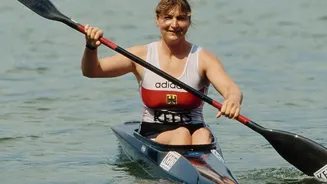
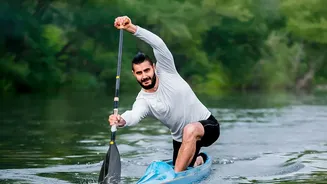
At first glance, kayaking seems like it's all about the arms. While your arms, shoulders, and back are certainly doing a lot of work, the true engine of a powerful kayak stroke comes from your core. With every pull of the double-bladed paddle, you engage
your abdominal muscles and obliques to rotate your torso, generating force and stability. This makes kayaking an exceptional workout for developing upper-body and core strength. Since you're seated, your legs play a lesser role, primarily bracing for balance and support. This seated position makes kayaking a very stable and low-impact activity, which is gentle on the joints and often easier for beginners to pick up without the initial fear of falling in. The intensity is highly scalable; a leisurely paddle on a calm lake is a relaxing cardio session, while battling waves or paddling for speed provides a high-intensity challenge.
Paddleboarding: A Full-Body Balancing Act
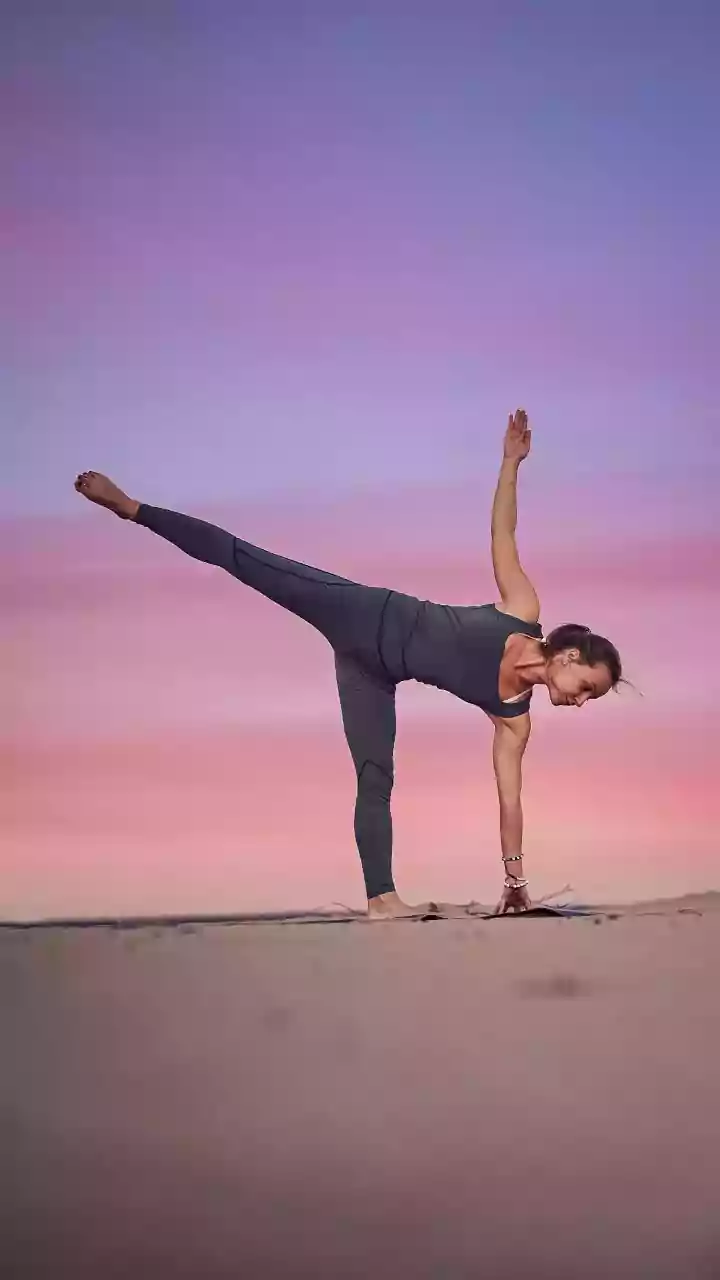
Stand-up paddleboarding (SUP) is a true test of full-body engagement. From the moment you stand on the board, your entire body is working. Your feet, legs, and glutes are constantly making micro-adjustments to maintain balance, creating an isometric workout for your lower half. Your core is the critical link, staying continuously engaged to keep you stable and upright on an unsteady surface. This constant need for balance is what sets SUP apart. Then, you add the paddling motion, which works your shoulders, back, and arms, much like in kayaking, but with the added challenge of maintaining your posture while standing. This combination makes paddleboarding a more comprehensive, total-body workout that improves balance, core stability, and strength simultaneously.
Intensity and Calorie Burn: It's All About Effort
So, which one burns more calories? The answer isn't straightforward because effort matters more than the equipment itself. However, due to the full-body muscle recruitment required just to stay balanced, paddleboarding often has a higher potential for calorie burn during a typical recreational session. A casual hour of paddleboarding might burn between 400 and 500 calories, while a similar-paced kayak trip might burn 300 to 400. Some estimates suggest a vigorous SUP session could burn up to 700 calories per hour. But this changes with intensity. A high-speed touring kayak session can easily outpace a lazy paddleboard drift. Ultimately, the more you put into it—by paddling faster, longer, or in more challenging conditions like wind and chop—the greater the workout, regardless of your craft.
How Water Conditions Change Everything
The environment plays a huge role in the intensity of your workout. On calm, glassy water, both sports allow you to set your own pace. You can focus on technique and enjoy a meditative glide or push yourself for a sprint. However, once wind and waves enter the picture, the experiences diverge significantly. For a paddleboarder, choppy water dramatically increases the difficulty. Your stabilizer muscles work overtime to prevent a fall, turning the session into a high-intensity balance challenge. A kayak, with its lower center of gravity and seated position, is far more stable in rough conditions. While it still requires more effort to paddle through wind and chop, the stability of the boat makes it a more reliable choice for consistent workouts when the weather isn't perfect.
Which Is Right for Your Fitness Goals?
Choosing between kayaking and paddleboarding comes down to the type of workout you prefer. If your primary goal is to build formidable upper-body and core strength with a fantastic cardiovascular element, and you prefer a stable, seated position that's forgiving in various conditions, kayaking is an excellent choice. It’s also a great option if you have issues with knee or ankle joints, as it puts less stress on them. If you're seeking a total-body challenge that relentlessly engages your core, tests your balance, and works your legs and upper body in unison, then stand-up paddleboarding is for you. It offers a unique combination of strength, balance, and cardio that can feel both intense and rewarding.