







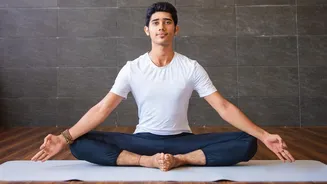

Understanding Emotional Resilience
First, let's define our goal. Emotional resilience is not about avoiding stress or suppressing difficult feelings. It is the ability to adapt to life's challenges, bounce back from adversity, and manage difficult emotions without becoming overwhelmed.
Think of it as emotional flexibility—the capacity to bend without breaking when faced with pressure, whether it's from a looming deadline, a difficult conversation, or navigating traffic. Resilient people can regulate their emotions and maintain a sense of balance, which allows them to approach problems with a clearer mind. This strength is a skill, and like any skill, it can be cultivated through consistent practice.
The Mind-Body Connection in Yoga
Yoga's power lies in its holistic approach to the mind and body. It operates on the principle that our mental state and physical state are deeply intertwined. Stress isn't just a mental event; it manifests physically as muscle tension, shallow breathing, and a racing heart. This is your sympathetic nervous system, or 'fight-or-flight' response, taking over. Yoga, through a combination of physical postures (asanas), breathwork (pranayama), and mindfulness, directly counteracts this. It activates the parasympathetic nervous system, also known as the 'rest-and-digest' system, which calms the body and promotes recovery. This conscious shift from a state of alarm to a state of calm is the first step in building resilience.
How Asanas Rewire Your Stress Response
The physical practice of yoga asanas does more than just build flexibility and strength. It serves as a laboratory for stress. When you hold a challenging pose, your body might tense up and your mind might start to complain. This mirrors how you react to stress in daily life. However, on the mat, you learn to breathe through the discomfort, to notice the tension without reacting to it, and to consciously relax into the stretch. This practice of observing discomfort and responding with calm breath rewires your nervous system over time. Studies show that regular yoga practice can lower levels of the stress hormone cortisol. By repeatedly teaching your body to find ease within effort, you develop a new, more adaptive response to pressure that carries over into your life off the mat.
Mindfulness: The Active Ingredient
While asanas provide the physical framework, mindfulness is the crucial ingredient that supercharges resilience. Mindfulness is the practice of paying attention to the present moment without judgment. During yoga, this means feeling the sensation of your muscles stretching, noticing the flow of your breath, and observing thoughts as they come and go without getting carried away by them. This cultivates self-awareness. You learn to recognise your emotional triggers and habitual reactions sooner. Research confirms that people with higher levels of mindfulness tend to have greater resilience. By creating a pause between a stressful trigger and your reaction, mindfulness gives you the power to choose a more measured response instead of an automatic one.
Simple Asanas to Get Started
You don't need to be an expert to start reaping the benefits. Integrating a few simple, mindful poses into your day can make a difference. Child's Pose (Balasana): This resting pose is known to immediately calm feelings of distress and tension. It gently stretches the back and hips while encouraging slow, deep breathing. Cat-Cow Stretch (Marjaryasana-Bitilasana): This gentle, flowing sequence connects movement with breath, releasing tension in the spine and promoting a sense of calm. Bridge Pose (Setu Bandhasana): This pose opens the chest and can help elevate your mood by improving blood flow. It also stimulates the thyroid gland, which helps regulate emotion and energy. Melting Heart Pose (Anahatasana): This posture deeply opens the chest and shoulders, areas where emotional tension is often stored. It fosters a sense of surrender and letting go.