




Ghevar: The Rajasthani Rain-Welcomer
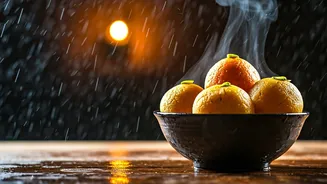
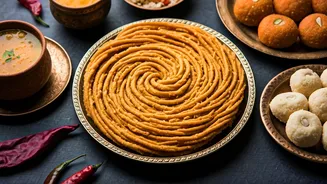
This honeycomb-like, disc-shaped sweet is synonymous with the monsoon months, especially during the Teej and Raksha Bandhan festivals. Hailing from Rajasthan, Ghevar's preparation is an art form that relies on the season's humidity to achieve its signature
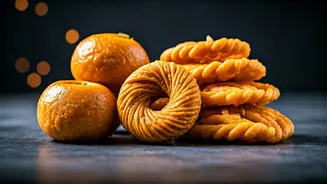
crispy, porous texture. Made from a batter of flour and ghee that is deep-fried and then soaked in sugar syrup, its creation is so weather-dependent that it's rarely available outside the rainy season. Often topped with rabri, malai, or nuts, Ghevar is more than a dessert; it's a delicious celebration of the rains.
Malpua: The Ancient Sweet Pancake
Perhaps one of India's oldest desserts, with origins tracing back to the Vedic period, Malpua is the nation's answer to the pancake. These small, fluffy cakes are made from a batter of flour, semolina, and sometimes mashed banana, then deep-fried in ghee until the edges are crisp and the centre is soft. They are then dunked in a fragrant sugar syrup, often flavoured with cardamom or fennel. The pleasure of eating a hot, syrup-drenched Malpua while watching the rain fall is a cherished monsoon experience, especially when paired with a dollop of thick rabri.
Jalebi: The Spiralled Syrup-Bomb
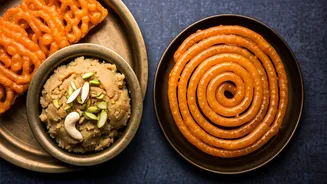
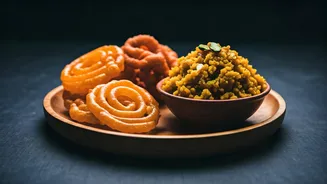
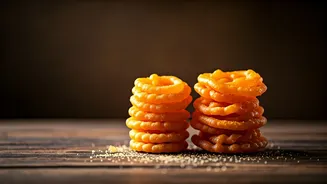
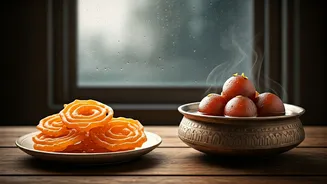
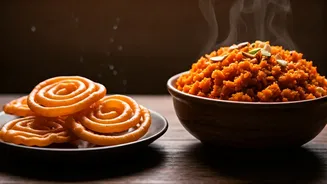
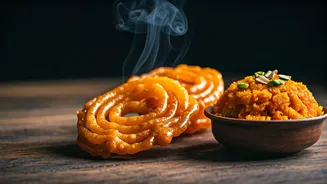
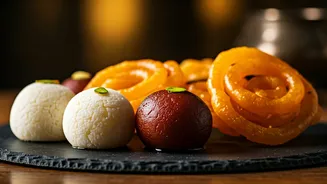
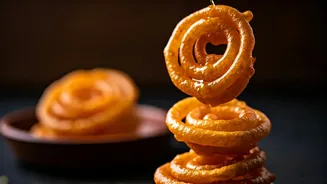
There are few sights as tempting as freshly fried jalebis, with their vibrant orange hue and intricate spiral shape. Made from a fermented batter that is fried until crunchy and then immediately soaked in warm sugar syrup, a hot jalebi is the ultimate comfort food on a cool, damp day. The contrast between the crispy exterior and the liquid syrup-filled centre is what makes it an enduring favourite. While enjoyed year-round, the craving for this warm, sweet, and sticky treat intensifies during the monsoon, making it a staple at street-side stalls and family gatherings.
Gulab Jamun: The All-Season Comfort
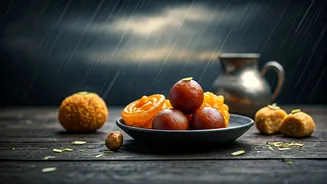
A quintessential Indian mithai, Gulab Jamun holds a special place in the hearts of dessert lovers. These soft, spongy balls are made from khoya (milk solids), fried to a perfect golden-brown, and then left to soak in a fragrant, rose-flavoured sugar syrup. Though popular at every festival and celebration, there is a unique joy in savouring a warm Gulab Jamun on a rainy day. Its rich, melt-in-the-mouth texture provides an instant feeling of warmth and indulgence, making the gloomy weather outside feel a little more cheerful.
Moong Dal Halwa: The Warming Indulgence
While often associated with winter, the comforting warmth of Moong Dal Halwa makes it a welcome treat during the monsoon as well. This rich dessert, made from yellow moong dal slow-cooked in ghee, milk, and sugar, is a labour of love. The process of constantly stirring the lentil paste until it achieves a grainy, aromatic, and melt-in-the-mouth consistency is what gives it its unique character. The generous amount of ghee provides warmth and energy, making it a perfect antidote to the damp chill of a rainy evening.
Why We Crave These Comforts
The connection between the monsoon and cravings for hot, fried, and sweet foods is both psychological and physiological. The cooler, damp weather encourages a desire for warm, comforting foods. According to some experts, the lack of sunlight during this season can cause a dip in serotonin, the 'happy hormone'. Consuming carbohydrates, like those found in these desserts, can help boost serotonin levels, providing a temporary feeling of well-being. Furthermore, many of these sweets are associated with festivals and happy childhood memories, making them emotionally satisfying as well.