





What Exactly Is an AI Beauty Advisor?
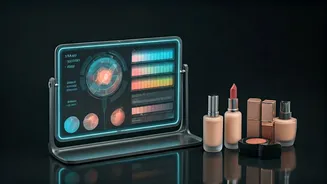
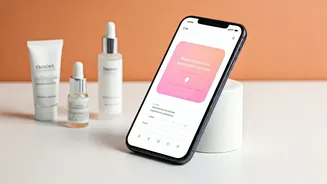
At its core, an AI beauty advisor is a sophisticated software program designed to act as your personal consultant. Using your smartphone's camera, these tools employ artificial intelligence and augmented reality (AR) to analyse your face. They can assess
your skin for concerns like dryness, fine lines, or dark spots; determine your unique skin tone and undertone for that perfect foundation match; and let you 'try on' products virtually. Think of it as a combination of a skin diagnostic tool and a virtual makeup mirror, all powered by intelligent algorithms that learn from vast amounts of data to provide tailored recommendations.
Your New Virtual Makeup Counter
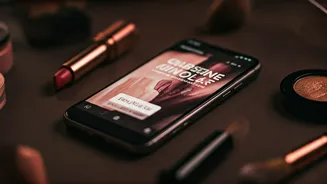
This technology is no longer futuristic; it's already integrated into the shopping experience of major brands and retailers in India and globally. E-commerce giant Myntra, for instance, launched a 'Digital Skincare Advisor' to provide users with personalised routines. Brands like L'Oréal have been pioneers, with their ModiFace technology powering virtual try-on tools across platforms like Nykaa and even Amazon. This allows you to test hundreds of lipstick shades or see how a new hair colour looks on you without commitment. Other popular apps like YouCam Makeup and Olay's Skin Advisor offer similar services, using a single selfie to generate detailed skin analyses and product suggestions.
The Promise of Perfect Personalisation
The primary appeal of AI beauty advisors is the hyper-personalisation they offer. For many shoppers, this technology removes the uncertainty and hygiene concerns associated with in-store testers. It offers the convenience of trying dozens of products from your couch, helping you make more confident purchase decisions. Brands benefit too, seeing higher customer engagement and a significant increase in conversion rates for products that feature virtual try-on capabilities. By analysing data on trends and user preferences, companies can also innovate faster, developing new products and shade ranges that cater to specific consumer needs.
More Than Skin Deep: The Hidden Concerns
While convenient, the rise of AI beauty advisors brings significant concerns. The most pressing is data privacy. When you use these services, you are often providing a company with your biometric data—a detailed scan of your face. This raises questions about how this sensitive information is stored, used, and protected from potential breaches or misuse. Another major issue is algorithmic bias. If an AI is trained on a dataset that isn't diverse, it may perform poorly for people with darker skin tones or fail to recognise diverse facial features, perpetuating narrow, often Eurocentric, beauty standards. Studies have shown this can lead to inaccurate recommendations and reinforce harmful stereotypes.
The Algorithm vs. The Human Touch
Can an algorithm truly replace a human expert? While AI offers speed and data-driven analysis, it has its limitations. An AI can't feel the texture of your skin or understand the nuances of your personal style in the way a seasoned makeup artist can. However, AI is also free from the potential for sales pressure that might come from an in-store consultant. On the other hand, AI-generated images and advice can create unrealistic beauty standards, with some studies showing that AI models consistently produce faces rated as more attractive than real humans, potentially impacting users' self-esteem. Ultimately, the AI tool is designed to facilitate a purchase, blending advice with commerce.