

Our Electronic Shield is Brittle
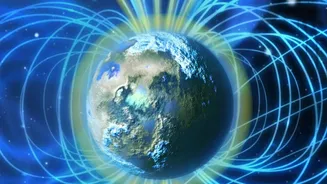
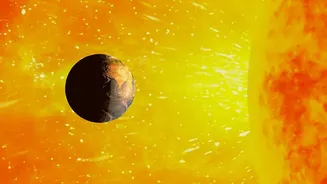
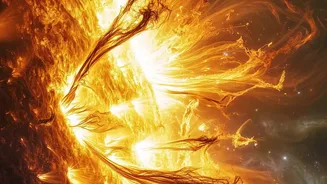
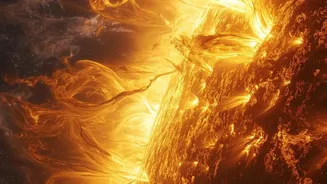
A severe solar storm is more than just a spectacular aurora. These events release huge amounts of energy that can have serious consequences for our technology-dependent society. When a powerful storm slams into Earth's magnetic field, it can induce electrical
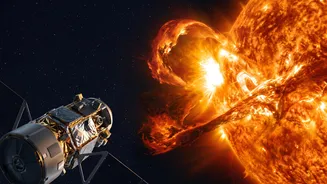
currents on the ground, potentially overwhelming and frying power grid transformers. This could lead to widespread and long-lasting blackouts. In space, the threat is even more direct. Satellites responsible for GPS, communications, and weather forecasting can have their electronics damaged or their orbits altered, causing them to fail or even fall from the sky. For astronauts and even passengers on high-altitude polar flights, there is an increased radiation risk. As our world becomes more connected, our vulnerability to the Sun's outbursts only grows.
The Challenge of Predicting Chaos
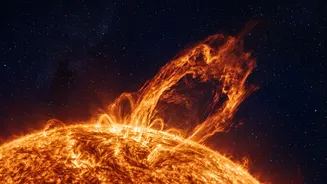
Forecasting space weather is incredibly difficult. The eruptions that cause solar storms, such as solar flares and coronal mass ejections (CMEs), are notoriously unpredictable. Flares travel at the speed of light, meaning we see them as they are happening, leaving no time to prepare for their immediate effects on radio communications. CMEs, which are massive clouds of plasma, can take days to reach Earth, but knowing exactly which ones will hit us and how powerful they will be has been a persistent challenge for scientists. Traditional forecasting methods rely on observing the Sun's surface for tell-tale signs, but these models often provide limited warning time, making it hard for satellite operators and grid managers to take meaningful protective measures. The sheer volume and complexity of solar data have made it nearly impossible for human analysts to spot all the subtle precursors to a major event.
AI Joins the Watch
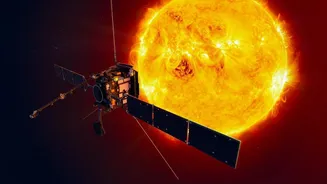
This is where artificial intelligence comes in. NASA and its research partners are now developing sophisticated AI models trained to sift through decades of solar observation data. These systems can detect faint, complex patterns in the Sun's magnetic field and plasma activity that human scientists might miss. One such groundbreaking model is called DAGGER (Deep Learning Geomagnetic Perturbation). By analyzing real-time data from spacecraft measuring the solar wind, DAGGER can predict the specific location and severity of a geomagnetic disturbance on Earth with up to 30 minutes of advance warning. This is a critical window of time that could allow for proactive measures.
A 30-Minute Head Start
While 30 minutes may not sound like much, in the context of a solar storm, it can be the difference between resilience and disaster. This warning could give power grid operators enough time to reroute power or take sensitive systems offline, preventing catastrophic failure. Satellite controllers could orient their spacecraft to better withstand the incoming radiation or shut down non-essential components to avoid damage. Telecommunication companies could prepare for potential disruptions. The code for the DAGGER model is open source, allowing various industries to adapt it for their specific needs and build a more robust global defense against space weather. It represents a fundamental shift from simply bracing for impact to actively mitigating it.
Looking for Even Earlier Clues
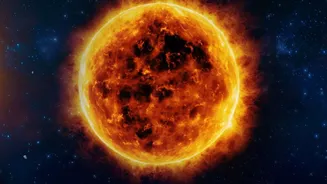
Other AI projects are aiming to provide even earlier warnings. Researchers with a NASA-supported initiative called COFFIES are using a type of AI known as a transformer model—similar to the technology behind large language models—to look for signs of storm-brewing active regions before they even fully emerge on the Sun's surface. By analyzing subtle changes in solar vibrations, a field known as helioseismology, this AI has shown the ability to predict the emergence of these potentially dangerous regions up to 12 hours in advance. While an emerging active region doesn't guarantee a storm, it acts as a crucial early alert, telling forecasters exactly where to focus their attention. This multi-layered approach, combining long-range and short-range AI forecasts, promises a new era in space weather preparedness.