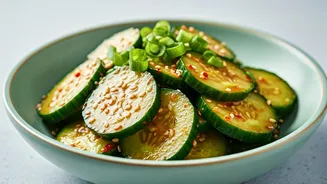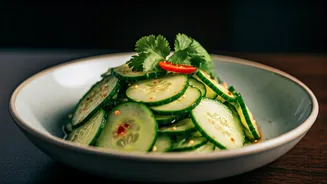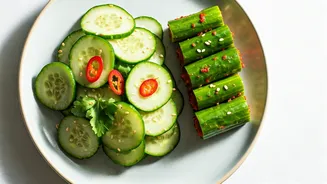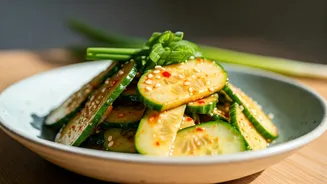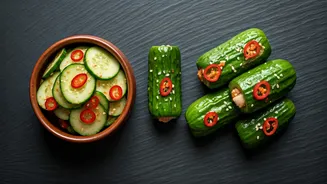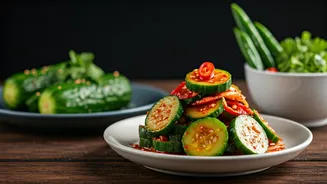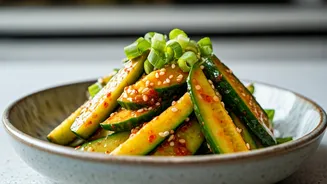


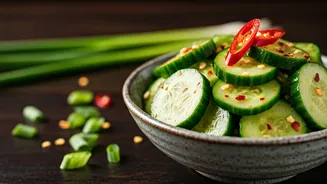
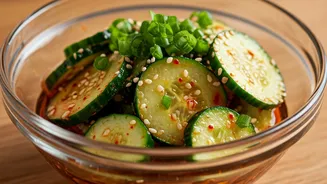


Introducing Oi Muchim
This vibrant dish, known in Korean as Oi Muchim, is a staple banchan—a collection of small side dishes served alongside rice with most Korean meals. While there are countless variations, the core of the dish is always the same: crisp cucumbers tossed
in a flavourful dressing. It's a quick, no-cook side that delivers a complex combination of spicy, tangy, and slightly sweet notes, making it the perfect counterpoint to grilled meats, rich stews, or a simple bowl of rice. Its popularity lies in its simplicity and the refreshing crunch it provides.
The Science of Supreme Crunch
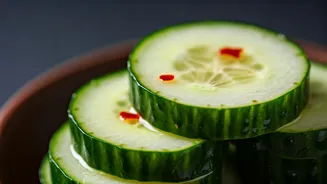
The number one rule for achieving a truly crunchy cucumber salad is to draw out excess water from the cucumbers before dressing them. This is a non-negotiable step. By tossing the sliced cucumbers with coarse salt and letting them sit for 15-20 minutes, you initiate osmosis. Water is pulled from the cucumber slices, leaving them seasoned and, most importantly, incredibly crisp. After they've rested, you'll see a surprising amount of water at the bottom of the bowl. Discard this liquid, and some recipes even recommend a quick rinse and pat dry, to ensure the dressing isn't diluted and the cucumbers remain as crunchy as possible.
Choosing the Right Cucumber
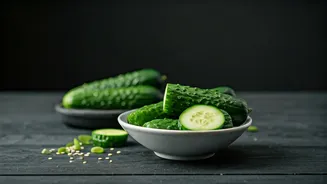
While you can technically use any cucumber, certain varieties lend themselves better to Oi Muchim. For the best texture, look for cucumbers with thin skin and minimal seeds. Persian, Kirby, English, and Japanese cucumbers are all excellent choices. These varieties are less watery and hold their crunch well after being salted and dressed. If you can only find standard, thick-skinned cucumbers, it's best to peel them and use a spoon to scrape out the seeds before slicing. This will prevent the salad from becoming watery and ensures a better texture.
Gather Your Dressing Ingredients
The dressing for Oi Muchim is a masterclass in balanced flavour. The primary seasoning is gochugaru, or Korean red pepper flakes, which provides a vibrant colour and a smoky heat that is not overwhelmingly spicy. This is typically combined with soy sauce (or coconut aminos for a gluten-free option), toasted sesame oil, minced garlic, and a touch of sweetness from sugar or honey. Rice vinegar adds a necessary tang to cut through the richness. Toasted sesame seeds add a final layer of nutty flavour and texture. Some recipes also include gochujang (Korean chili paste) for a deeper, more fermented flavour, or thinly sliced onion and spring onions for added freshness.
The Method: Step by Step
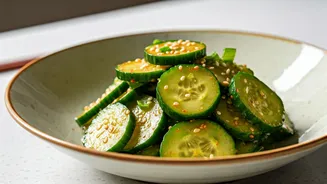
First, wash and thinly slice about 500 grams of your chosen cucumbers. Place them in a bowl, toss with a teaspoon or two of coarse salt, and set aside for 15-20 minutes. While they rest, prepare your dressing. In a small bowl, whisk together two tablespoons of gochugaru, a tablespoon each of soy sauce, toasted sesame oil, and rice vinegar, along with two minced garlic cloves and a teaspoon of sugar. Once the cucumbers have released their water, drain them thoroughly. Pat them dry for extra crunch. Combine the drained cucumbers with the dressing in a large bowl. Add a handful of toasted sesame seeds and thinly sliced spring onions. Toss everything together until the cucumbers are evenly coated.
Serving and Storage
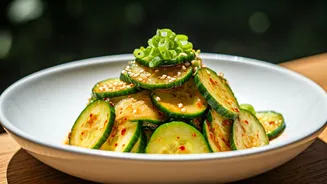
Oi Muchim is best served immediately to enjoy its maximum crunchiness. It’s a fantastic side dish for Korean BBQ, cutting through the richness of grilled meats like galbi or bulgogi. You can also serve it as part of a rice bowl or alongside any meal that needs a fresh, spicy kick. If you have leftovers, they can be stored in an airtight container in the refrigerator for up to three days. While the cucumbers will lose some of their initial crispness over time, the flavours will continue to meld and deepen, making for a delicious, albeit softer, snack.