



Unlocking the Sector with Policy Reforms
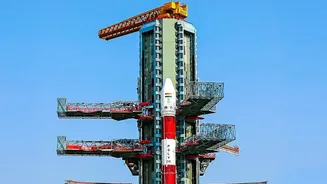
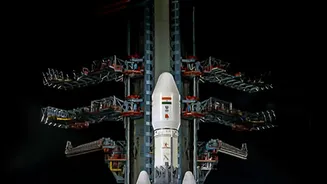
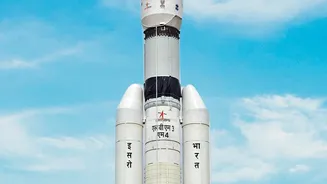
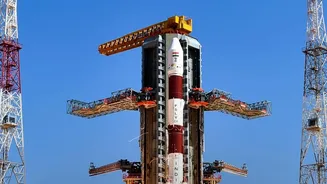
The single biggest catalyst for the startup boom was the government's historic decision in June 2020 to open the space sector to private participation, a move solidified by the Indian Space Policy 2023. This policy framework was designed to move beyond
ISRO's monopoly and foster a vibrant commercial ecosystem. It created clear roles for different bodies: ISRO would focus on research and development, while a new entity, the Indian National Space Promotion and Authorisation Centre (IN-SPACe), was established. IN-SPACe acts as a single-window agency to promote, authorise, and supervise all space activities by private companies, drastically simplifying the regulatory landscape. This has created a predictable environment that encourages investment and allows startups to engage in end-to-end activities, from building launch vehicles to operating satellites.
Standing on the Shoulders of a Giant
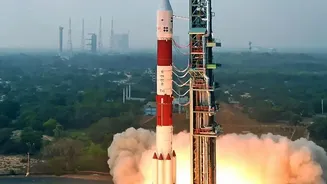
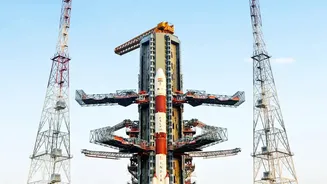
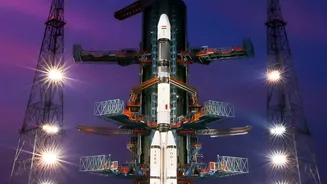
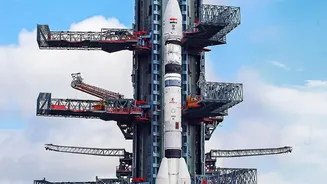
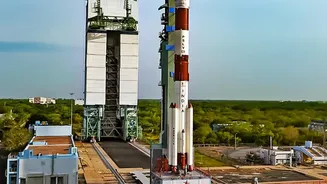
Instead of competing with the Indian Space Research Organisation (ISRO), startups are leveraging its five decades of expertise. The new policy mandates that private entities can access ISRO's world-class facilities, technologies, and technical expertise, often for a fee. This collaboration is a win-win: startups get to use state-of-the-art testing facilities and tracking networks without bearing the enormous initial cost, while ISRO transitions its focus to pioneering new technologies and deep space exploration. ISRO actively provides hand-holding support to these new companies, as seen in its assistance with the suborbital launch by Agnikul Cosmos. This symbiotic relationship has been crucial, allowing companies to accelerate development and build credibility on a global stage. ISRO has even invited private firms to participate in building India's first space station, a clear signal of a collaborative future.
The Influx of Investment Capital
With regulatory hurdles cleared and ISRO's backing, investors are now looking at India's space sector with renewed confidence. Private investment has surged, growing from just over $100 million in 2021-22 to more than $618 million by March 2026. In 2026 alone, several startups are seeking fresh capital, building on the momentum of major funding rounds for companies like Skyroot Aerospace and Pixxel. The government has further fueled this fire by liberalising Foreign Direct Investment (FDI) norms, permitting up to 74% FDI in satellite manufacturing and 49% in launch vehicles via the automatic route. The Indian space economy, currently valued at around $8-9 billion, is projected to reach over $40 billion by 2033, a massive market opportunity that has attracted both domestic and global venture capitalists.
A Growing Talent Pool and Entrepreneurial Drive
The startup boom is powered by people. India possesses a deep well of highly skilled engineers and scientists, many with direct experience from working at ISRO. This talent is now channeling its expertise into building agile, innovative private companies. Startups like Skyroot Aerospace, Agnikul Cosmos, Pixxel, and Dhruva Space were founded by such individuals, bringing world-class technical knowledge to the private sector. By mid-2026, the number of space startups in India had grown to over 450, a testament to the burgeoning entrepreneurial spirit. These companies are not just vendors to ISRO; they are developing their own intellectual property and building everything from 3D-printed rocket engines to constellations of high-resolution imaging satellites.
Demand for Downstream Data and Services
The growth isn't just about launching rockets; it's also about what the satellites in orbit can do. There is immense and growing demand for satellite-enabled services, which forms the downstream segment of the space economy. Startups are leveraging space technology for a wide range of applications on Earth. For example, Pixxel is building a constellation of hyperspectral imaging satellites to provide AI-powered analytics for agriculture, mining, and climate research. Others like SatSure provide 'decision intelligence' from satellite data for banking, insurance, and infrastructure. This demand for data in sectors critical to India's economy is creating a sustainable business model for many satellite companies, ensuring the space-tech boom is grounded in real-world commercial applications.