




The Challenge of Finding Small Rocks in a Big Void
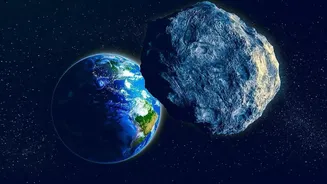
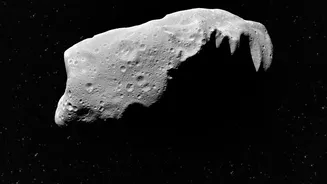
Before we get to the fiery show, it's important to understand why these objects are so stealthy in the first place. In the vastness of space, a small asteroid—one measuring just a few metres across—is essentially invisible to us on Earth. These objects are often
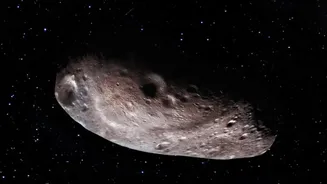
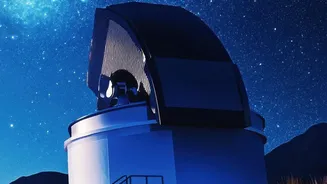
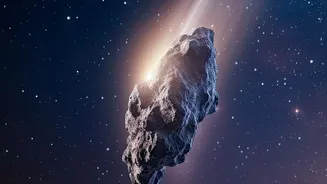
made of dark, non-reflective rock, making them incredibly faint. Trying to spot a car-sized, dark grey rock millions of kilometres away against the black backdrop of space is a monumental task. While planetary defense programs are excellent at finding and tracking large Near-Earth Objects (NEOs) that could pose a significant threat, the sheer number and tiny size of smaller asteroids make them practically impossible to catalogue comprehensively. They are simply too small and too dim to be detected by most current survey telescopes until they are extremely close.
The Atmosphere's Violent Welcome
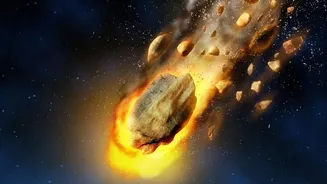
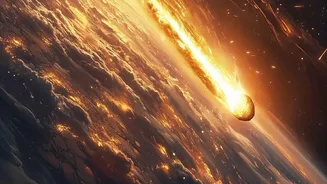
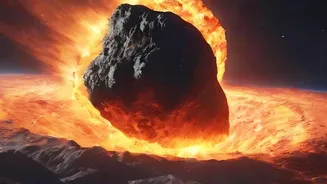
The game changes dramatically the moment the asteroid collides with Earth’s atmosphere. These objects are travelling at hypersonic speeds, typically between 11 and 72 kilometres per second. At that velocity, the asteroid doesn't just experience friction; it violently compresses the air in front of it. This rapid compression superheats that pocket of air to thousands of degrees Celsius—hotter than the surface of the sun. This intense heat, not friction alone, is what begins the process that turns a dark, cold rock into a spectacular fireball. The asteroid effectively becomes encased in a shell of incandescent plasma as it plummets deeper into the atmospheric layers.
From Solid Rock to Blazing Meteor
This extreme heating has a dramatic effect on the asteroid itself. The surface of the rock begins to vaporize in a process called ablation. Material is stripped away layer by layer, turning directly from solid to gas and creating a glowing trail of debris in its wake. What we see from the ground as a 'shooting star' or meteor is not the rock itself glowing, but this surrounding envelope of superheated air and vaporized material. The bigger the object, the brighter the fireball, which astronomers refer to as a bolide. For many small asteroids, this atmospheric journey is their final act. The immense pressure and heat cause them to break apart and completely disintegrate high above the ground, often between 80 and 130 kilometres in altitude.
Our Atmosphere: A Natural Detector
In this light, Earth’s atmosphere acts as both a shield and a giant, planet-sized detector. It’s precisely the interaction with our atmosphere that makes the previously invisible suddenly and spectacularly visible. Without it, these small rocks would impact the surface silently and without warning, as they do on airless bodies like the Moon. Instead, our blanket of air announces their arrival with a brilliant flash of light. Scientists estimate that about 48.5 tons of meteoritic material falls on Earth each day, with almost all of it burning up harmlessly in the atmosphere. So, while a last-minute detection might sound alarming, it’s the natural and expected outcome for the countless small space rocks that cross Earth’s path.
When Fireballs Get Too Close
While most of these atmospheric entries are harmless light shows, sometimes a larger object can create a more significant event. If a meteoroid survives its fiery descent, any part that strikes the ground is called a meteorite. Occasionally, a larger asteroid will explode in an airburst before reaching the surface, as happened over Chelyabinsk, Russia, in 2013. That event was caused by an object estimated to be about 20 metres wide, and the resulting shockwave caused widespread damage. Events of that scale are rare, and they serve as a potent reminder of why planetary defense agencies focus their efforts on finding potentially hazardous asteroids. NASA's DART mission, for example, successfully tested our ability to deflect an asteroid, a key technique for future protection.