



A Symphony of Silent Light
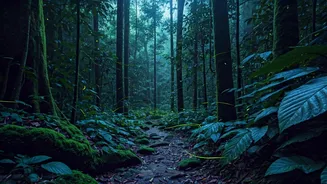
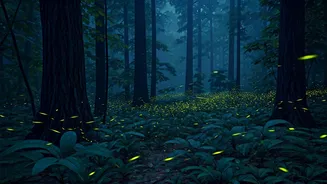
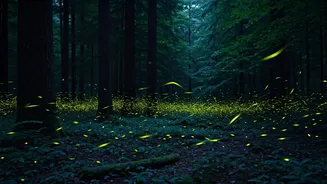
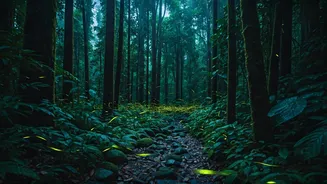
Imagine a rural landscape just after dusk. The familiar sounds of the evening—the chirping of crickets, the distant call of a nightjar—are suddenly accompanied by a visual spectacle. A single spark appears, then another, and another, until the entire
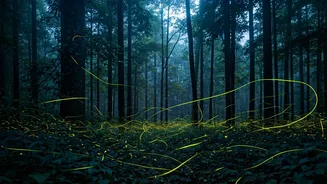
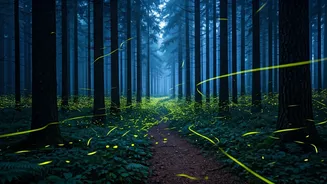
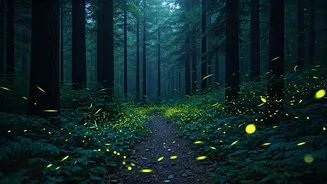
forest canopy, the bushes along a riverbank, or the fields surrounding a village are pulsating with thousands of tiny, synchronised lights. This isn't a festival of man-made lanterns; this is the living, breathing luminescence of fireflies, or ‘jugnu’ as they are fondly called across India. For a few precious weeks, typically in the pre-monsoon and early monsoon months of May and June, they transform ordinary nights into something otherworldly. It’s a fleeting phenomenon that reminds us of the quiet, profound beauty hidden within our natural world.
The Science Behind the Sparkle
What appears to be pure magic is, in fact, a marvel of biochemistry. The glow of a firefly is a form of 'cold light' known as bioluminescence. Inside their abdomens, a chemical reaction occurs when a substance called luciferin mixes with an enzyme, luciferase, in the presence of oxygen and ATP (the energy-carrying molecule in all living things). Unlike a light bulb, which wastes most of its energy as heat, this process is incredibly efficient, converting nearly all its energy into light. This cold, efficient glow is not just for show; it’s a sophisticated language. Each flicker and pulse is a carefully crafted message, a vital part of the firefly's short and dramatic life.
A Dazzling Mating Dance
The mesmerising light show is primarily a grand romantic gesture. Male fireflies fly around, flashing specific patterns to announce their species and their availability. Females, often perched on leaves or blades of grass, watch the display. If a female is impressed by a particular male's signal, she will respond with a flash of her own. This luminous conversation can lead to mating, ensuring the next generation of these enchanting insects. Different species have their own unique flash patterns, frequencies, and colours—from yellow and green to pale red—creating a complex, silent dialogue that plays out in the darkness. Some species even synchronise their flashes across vast areas, creating a breathtaking, rhythmic pulse of light that scientists are still working to fully understand.
Where to Witness the Magic
While fireflies can be spotted in many rural, unpolluted pockets of India, some places have become famous for their spectacular congregations. Maharashtra is a hotspot, with destinations like Purushwadi, Bhandardara, Rajmachi, and the Dang Forest hosting firefly festivals that attract nature lovers from across the country. These regions, with their dense forests and minimal light pollution, provide the perfect habitat. In the south, the hills of the Western Ghats in Karnataka, including Coorg, and parts of Tamil Nadu and Kerala also offer incredible viewing opportunities. The key is to find a location away from the glare of city lights, allowing your eyes to adjust to the darkness and fully appreciate the subtle, yet overwhelming, beauty of the display.
Protecting Our Fading Stars
Unfortunately, this magical experience is becoming rarer. Firefly populations around the world are in decline, and India is no exception. The primary culprits are habitat loss, the increasing use of chemical pesticides in agriculture, and, most critically, light pollution. The artificial lights from our cities, towns, and even highways disrupt the delicate flashing signals that fireflies rely on for mating. When they can't find each other, they can't reproduce, leading to a dwindling population. Their decline is a silent alarm, a signal that the health of our ecosystems is under threat. Protecting them means preserving forests, promoting organic farming, and being more conscious of our light usage.