





Understanding Your Pet's Fear
A dog or cat’s fear of thunderstorms, known as astraphobia, is more than just a dislike of loud noise. Pets can sense changes in barometric pressure long before we can, and the buildup of static electricity in the air can be uncomfortable. The low-frequency
rumble of distant thunder, which we might not even hear, is easily picked up by their sensitive ears. For rescue animals, this sensory overload can be especially terrifying. Many have histories of trauma, neglect, or abandonment, making them more prone to anxiety. The chaos of a shelter environment can also heighten their sensitivity to loud, unpredictable noises. Common signs of storm phobia include trembling, panting, excessive drooling, hiding, whining, and destructive behaviour.
Create a Monsoon-Proof Safe Haven
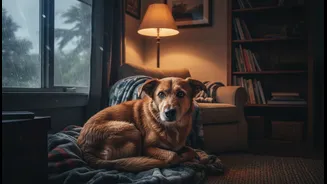
One of the most effective things you can do is help your pet establish a safe space they can retreat to. This shouldn't be a place you force them into, but rather a spot they choose themselves, like a closet, under a bed, or in a bathroom. Make this 'den' comfortable with their favourite soft bedding, a familiar toy, and maybe an item of your clothing that carries your scent. If your pet is crate-trained, you can make their crate the safe space, but always leave the door open so they don’t feel trapped. Close the curtains to block out flashes of lightning and play some calming classical music or white noise to help muffle the sound of thunder.
What to Do During the Storm
Your own behaviour during a storm is crucial. Dogs and cats are masters at reading our emotions, so if you remain calm and composed, it sends a powerful signal that there is nothing to fear. It is a myth that comforting a scared pet reinforces their fear; you cannot reinforce an emotion. Offer gentle petting or just sit quietly with them if they seek you out. Distraction can also be a powerful tool for mild anxiety. Try engaging your pet in a quiet indoor game or offering a long-lasting chew or a food puzzle like a frozen Kong. This can help redirect their focus and build a more positive association with stormy weather. Products like anxiety wraps or Thundershirts, which apply gentle, constant pressure, can also have a calming effect for some animals, much like swaddling an infant.
Long-Term Solutions for Lasting Calm
For pets with severe phobia, managing their fear is a long-term project that should continue even when the skies are clear. Behaviour modification techniques like desensitisation and counter-conditioning can be very effective. This involves playing recordings of storm sounds at a very low, barely audible volume while giving your pet high-value treats or playing their favourite game. Over many sessions, you can gradually increase the volume, helping your pet to associate the sound of thunder with something positive. The key is to go slowly and never push them to a point where they show signs of anxiety. This process takes patience but can significantly reduce their fear over time.
When You Need Professional Help
If your pet's phobia is severe, causing them to panic, become destructive, or even injure themselves, it's essential to seek professional help. Your veterinarian can rule out any underlying medical issues and discuss a range of options. These might include natural calming supplements containing ingredients like L-theanine or pheromone diffusers (like Adaptil for dogs) that mimic calming maternal scents. In more extreme cases, a vet may prescribe anti-anxiety medication to help your pet cope during storms. This is not a sign of failure but a humane way to relieve your pet's suffering. Working with a certified animal behaviourist can also provide you with a tailored plan for managing your pet's specific fears.