



Want stronger, more defined thighs? Squats and lunges are your go-to exercises. But to get the best results safely, it's crucial to understand how they work and, more importantly, how to do them correctly.
Understanding Your Thighs
Before diving into the exercises, let's quickly
meet the muscles you'll be working. Your thighs have four main muscle groups. The quadriceps, or 'quads', are on the front and help you extend your knee. The hamstrings run along the back, and are key for bending your knee and extending your hip. The adductors are on the inside of your thigh, responsible for bringing your legs together, while the abductors on the outside of your hips help move your leg away from your body and provide stability.
The Squat: A Total Thigh Builder
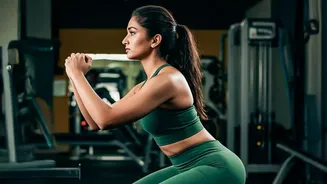
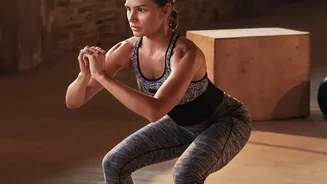
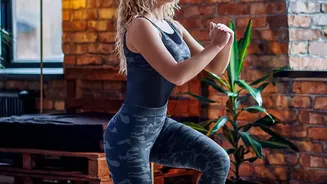
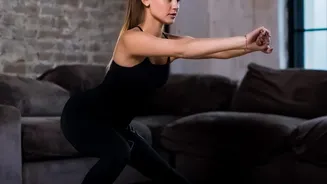
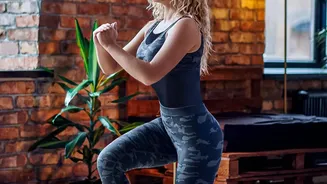
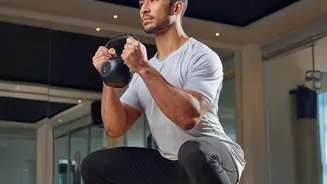
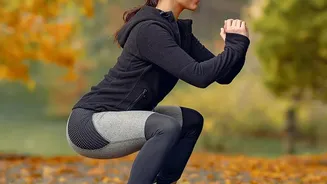
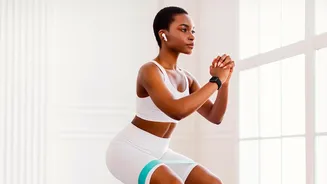
The squat is a foundational compound exercise, meaning it works multiple muscle groups at once. It's renowned for building strength in the quadriceps and glutes, with the hamstrings and core muscles also playing a significant role in stabilization. To perform a basic bodyweight squat, stand with your feet about shoulder-width apart, with your toes pointing slightly outward. Keeping your chest lifted and your back straight, begin the movement by pushing your hips back as if you are about to sit in a chair. Lower yourself until your thighs are at least parallel to the floor, ensuring your weight is on your heels and midfoot. Then, drive through your heels to return to the starting position.
Common Squatting Mistakes to Avoid
Proper form is crucial to prevent injury and get the most out of your squats. A frequent mistake is allowing the knees to cave inward, which can be avoided by consciously pushing them slightly outward so they track in line with your feet. Another common error is letting your chest fall forward or rounding your back, which puts unnecessary stress on your spine. Always keep your core engaged and your torso as upright as possible. Finally, avoid lifting your heels off the ground; this often indicates tight calf muscles or limited ankle mobility and shifts strain to your knees. If you can't reach parallel without your heels lifting, work on your ankle flexibility and squat only as deep as you can with good form.
The Lunge: Targeting Each Leg Individually
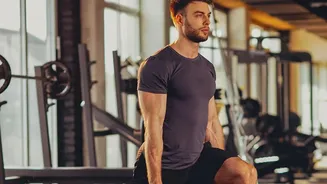
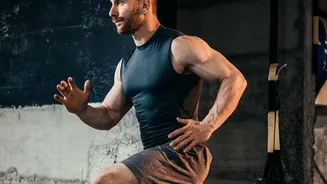
Lunges are a unilateral exercise, meaning they work one leg at a time. This makes them excellent for improving balance, coordination, and addressing muscle imbalances between your left and right sides. A standard forward lunge primarily targets the quads and glutes, while also engaging the hamstrings and core for stability. To perform one, stand with your feet hip-width apart. Take a controlled step forward with one leg, lowering your hips until both knees are bent at approximately a 90-degree angle. Your front knee should be directly above your ankle, not drifting past your toes, and your back knee should hover just above the floor. Push off the heel of your front foot to return to the starting position.
Avoiding Lunge Pitfalls
The most common lunge mistake is letting the front knee travel too far forward, past the toes, which places excessive strain on the knee joint. To correct this, take a slightly larger step and focus on lowering your hips straight down. Another pitfall is having a narrow, 'tightrope' stance, which makes balancing difficult. Ensure your feet remain about hip-width apart as you step forward. Maintaining an upright torso and engaged core is also key to stability and preventing strain on your lower back. Don't rush the movement; a controlled lunge is safer and more effective. If forward lunges feel stressful on your knees, try reverse lunges, where you step backward instead. Many find this variation easier to control.