








The Roots of Harela
Harela is a folk festival deeply embedded in the agricultural heart of the Kumaon region and also celebrated in parts of Garhwal. Its name literally translates to “greenery,” and it marks the arrival of the monsoon, a season of renewal and hope for farming
communities dependent on rain. Celebrated on the first day of the Hindu month of Shravan, the festival is timed perfectly with the beginning of the sowing season. For generations, it has been a way for people to express gratitude for the rains and pray for a bountiful harvest. The festival is also spiritually significant, commemorating the mythological wedding of Lord Shiva and Goddess Parvati, who reside in the Himalayas. Traditionally, preparations begin about ten days earlier, when families sow seeds of seven or five types of grain, like barley and wheat, in small baskets at home. These sprouted shoots, called Harela, are a key part of the celebration, symbolising fertility and prosperity.
From Household Ritual to Mass Movement
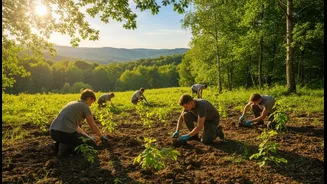
While the core traditions of Harela remain intimate and family-oriented, one particular custom has grown into a statewide environmental campaign: planting trees. What was once a simple act by families to plant a few fruit or fodder trees has evolved into a structured, large-scale afforestation drive. In recent years, the Uttarakhand government, along with forest department officials, schools, and local organisations, has transformed the festival into a platform for mass plantation. This shift turns a cultural practice into a powerful tool for ecological restoration, a natural evolution for a festival that has always revered nature. It has become a symbol of ecological responsibility, promoting the idea that protecting forests is not just a campaign but a way of life.
This Year's Green Ambitions
In 2026, the Harela festival, which falls on July 16, is set to witness an impressive green initiative. The Uttarakhand forest department has announced plans to plant a staggering 59 lakh saplings on that single day. This ambitious effort will see about 21 lakh saplings planted in the Garhwal region and 38 lakh in the Kumaon region. The plantation will cover thousands of hectares, with active participation from local communities alongside government staff. This builds on a campaign launched in 2015, which has seen progressively larger plantation numbers each year. In Dehradun district alone, officials have set a target of planting over 15.5 lakh saplings over a month-long period to mark the state's 25th anniversary, with a special focus on fruit-bearing and fodder species. The drive is being treated as a mass movement, not just a governmental formality, to ensure higher sapling survival rates and long-term impact.
A Blueprint for Community-Led Conservation
The success of the Harela sapling drive lies in its community-centric approach. The festival mobilises students, self-help groups, youth organisations, and village representatives, fostering a sense of collective ownership over the local environment. When communities plant trees as part of a cherished cultural tradition, the act goes beyond fulfilling a government target; it becomes a personal and shared responsibility. This model has gained relevance as climate change and deforestation pose increasing threats to the fragile Himalayan ecosystem. The initiative also focuses on conserving sacred forests, which have been traditionally protected by local communities who regard them as holy. By connecting policy with deep-rooted cultural practices, Uttarakhand provides a powerful example of how to make environmentalism a grassroots movement. The festival reinforces the idea that respecting nature is essential for survival and prosperity.