





From Plant to Pantry: A Tale of Two Sweeteners
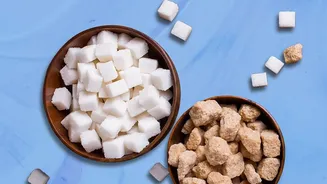
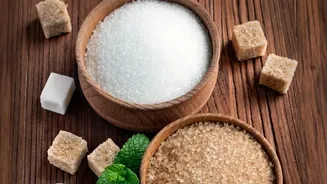
Both jaggery and white sugar begin their journey as juice extracted from sugarcane. However, their paths diverge dramatically from there. White sugar undergoes extensive industrial refining. The juice is clarified, filtered, crystallised, and bleached,
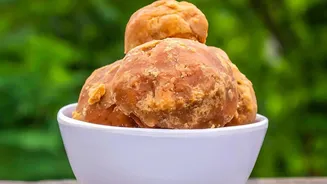
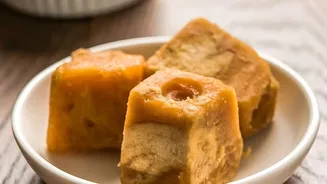
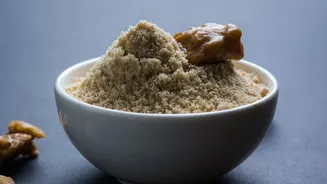
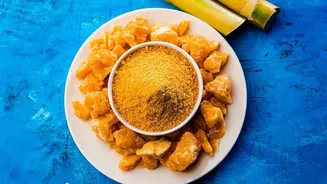
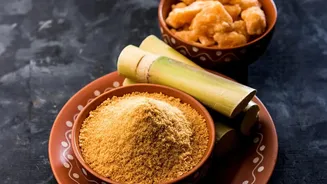
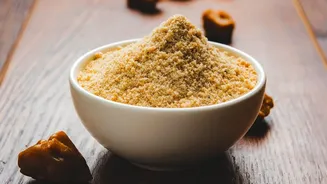
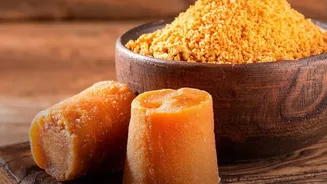
a process that strips away virtually everything except pure sucrose. The result is a uniform, white crystal with a neutral sweet taste. Jaggery, on the other hand, is made using a traditional, far simpler method. The sugarcane juice is boiled in large, open pans until it thickens into a dense syrup. This syrup is then poured into moulds to solidify. This minimal processing means jaggery retains the natural molasses from the sugarcane, which is responsible for its characteristic brown colour, complex flavour, and, most importantly, its nutrient content.
The Nutritional Divide: Minerals vs. Empty Calories
The key difference lies in what's left behind after processing. White sugar is essentially 99.9% sucrose, providing 'empty calories' with no significant vitamins or minerals. Jaggery, because it retains molasses, contains a modest amount of micronutrients. A 100-gram serving of jaggery can contain significant amounts of iron (around 11 mg), potassium (over 1000 mg), and magnesium (70-90 mg), nutrients that are completely absent in refined sugar. Calorie-wise, the two are nearly identical, with jaggery having about 383 calories per 100 grams and sugar having 387. So, while jaggery offers a nutritional edge, it is not a low-calorie food. The benefits are in the minerals it provides, not in calorie reduction.
Impact on Blood Sugar: A Common Misconception
Many people believe jaggery is a safer option for those managing blood sugar, but this is a dangerous myth. The Glycemic Index (GI), which measures how quickly a food raises blood sugar, tells a surprising story. Refined white sugar has a GI of around 65, while sugarcane jaggery has a GI that is often higher, around 84. This means jaggery can cause a faster and sharper spike in blood sugar levels than its refined counterpart. For individuals with diabetes or insulin resistance, both sweeteners should be treated with the same caution and consumed in very limited quantities, if at all. The idea that 'natural' equals low-GI is incorrect in this case.
Why Jaggery Shines in Winter
Traditional wisdom often associates jaggery with winter for good reason. In Ayurveda, jaggery is considered to have a warming effect ('Ushna') on the body, making it a popular addition to winter foods and drinks. It's traditionally consumed to help combat symptoms of the common cold and cough, as it can help soothe an irritated throat. Its mineral content, particularly iron, also provides a welcome boost during a season when energy levels can dip. Furthermore, jaggery is known to stimulate digestive enzymes, which can be helpful after heavy winter meals. These traditional uses contribute to its status as a winter staple in many Indian households.
The Purity Problem: Adulteration and Quality
While white sugar offers consistency due to its refined nature, jaggery's quality can vary widely. Because it is often produced in the unorganised sector, adulteration is a real concern. Some producers may add substances like chalk powder or washing soda to increase weight and alter appearance. Artificial colouring agents are also sometimes used to give jaggery a more appealing golden-yellow hue, but pure, unadulterated jaggery is typically dark brown. To ensure you are getting a quality product, it's best to buy from trusted brands, look for FSSAI certification, and be wary of jaggery that looks unnaturally bright or shiny. A simple test is to dissolve a piece in water; pure jaggery should dissolve leaving minimal residue.