







The Brain-Gut Connection: A 20-Minute Delay
The most crucial reason to slow down is that your brain needs time to catch up with your stomach. [19] It takes approximately 20 minutes from when you start eating for your brain to receive and process satiety signals. [10, 14] This communication happens
through a complex network of nerves and hormones. As your stomach fills, stretch receptors in its wall send instant messages to your brain via the vagus nerve. [3, 8] However, this is only one part of the equation. Hormonal signals, which are more nuanced, take longer to travel through the bloodstream to the brain's control center in the hypothalamus. [3, 5] If you eat too quickly, you can easily consume more food than your body needs before these crucial “I’m full” messages arrive, leading to that all-too-familiar feeling of being overstuffed. [4, 5]
Meet Your 'Fullness Hormones'
Over 20 different hormones are involved in regulating your appetite. [3] When you eat slowly, you give these chemical messengers a chance to do their job properly. As food enters your small intestine, cells release hormones like cholecystokinin (CCK), which signals satiety. [3, 8] Other key players are peptide YY (PYY) and glucagon-like peptide-1 (GLP-1), which are released further down the digestive tract to sustain the feeling of fullness. [13] Studies have shown that eating a meal over 30 minutes, compared to just 5 minutes, leads to significantly higher levels of these appetite-suppressing hormones. [21] Conversely, the "hunger hormone," ghrelin, is suppressed more effectively when you eat at a moderate pace. [9, 16] By wolfing down your food, you short-circuit this intricate hormonal feedback loop. [8]
Benefits Beyond Portion Control
Slowing down isn’t just about weight management; it has a host of other health benefits. Proper chewing is the first step in digestion, breaking down food and mixing it with saliva, which contains digestive enzymes. [7, 14] This makes the entire digestive process easier on your stomach and can reduce issues like bloating and indigestion. [14] Mindful, slower eating also increases your satisfaction and enjoyment of a meal. [7] When you pay attention to the tastes, textures, and smells of your food, you can feel more content with what you've eaten, which can help prevent snacking between meals. [1, 14] Studies show that people who eat slowly are less likely to be obese and tend to have healthier habits overall. [22]
Practical Tips to Savor Your Meal
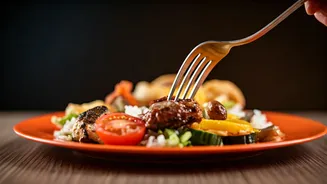
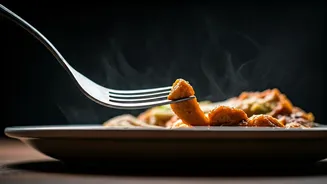
Knowing you *should* eat slower is one thing; actually doing it is another, especially in our fast-paced world. [6] Here are some simple, effective techniques to try: * **Put your utensils down:** After taking a bite, place your fork and knife on the plate. [1, 12] This simple pause forces you to slow down and be more present. * **Chew more thoroughly:** Try to chew each bite more times than you normally would. [2, 12] One study found that chewing each bite for longer decreased calorie intake by nearly 15%. [12] * **Eliminate distractions:** Turn off the TV, put your phone away, and focus solely on your meal. [1, 6] Distracted eating is almost always fast and mindless eating. [2] * **Sip water:** Taking small sips of water between bites can help you pace yourself and aids in hydration. [4, 6] * **Use a timer:** If you struggle to gauge your speed, try setting a timer for 20 minutes and making your meal last that long. [12] * **Sit with slow eaters:** We often unconsciously match the eating pace of those around us. Dining with someone who eats slowly can naturally help you slow your own pace. [1, 2]