




Choose Your Gear Wisely
The foundation of a light bag is lightweight gear. Start with your backpack or soft-shell cabin bag, aiming for one that weighs 1.5kg or less when empty. This leaves you with a precious 5.5kg for everything else. When it comes to rain gear, leave the
heavy-duty raincoat at home. Opt for an ultra-lightweight, packable waterproof shell or windbreaker. These are designed for travel, offer excellent protection, and can pack down to the size of an apple, often weighing less than 300 grams. This single choice can save you a significant amount of both weight and space.
Embrace the Capsule Wardrobe
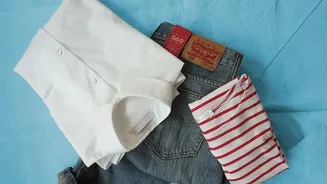
A capsule wardrobe is a small collection of items that can be easily mixed and matched. The core rule is that every top should work with every bottom. Stick to a neutral colour palette—like navy, grey, olive, and beige—for your main pieces and add a splash of colour with a lightweight scarf or accessory. For a week, you don’t need seven distinct outfits. Instead, pack versatile pieces that can be layered. A good formula is the '5-4-3-2-1' method: five tops, four bottoms, three accessories, two pairs of shoes, and one jacket. By ensuring everything coordinates, you can create more than a week's worth of different looks from a handful of items.
Master the Art of Layering
Layering is more space-efficient than packing bulky items. Instead of a thick sweater, pack a long-sleeved base layer, a t-shirt, and a lightweight fleece or cardigan. Synthetic fabrics and merino wool are your best friends here; they are lightweight, resist odours, and dry quickly, meaning you can wash them in a hotel sink and they’ll be ready to wear the next morning. Your travel outfit is also part of your packing strategy. Always wear your heaviest and bulkiest items on the plane, such as your hiking shoes or boots, trousers, and your bulkiest jacket. This frees up crucial space and weight in your bag.
Use Compression Packing Cubes
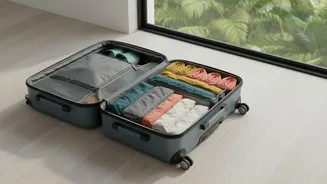
Packing cubes are essential for organisation, but compression packing cubes are a game-changer for saving space. These cubes have a second zipper that squeezes out excess air, significantly reducing the volume of your clothes. Roll your clothes tightly before placing them in the cubes to maximise compression and minimise wrinkles. Organise cubes by clothing type—one for tops, one for bottoms, one for underwear and socks. This not only saves space but also makes it easy to find what you need without unpacking your entire bag. You can also use one as a dedicated laundry bag for the trip home.
Downsize Toiletries and Tech
Liquids are heavy. Decant essential liquids into 100ml travel-sized bottles. Better yet, switch to solid toiletries. Solid shampoo, conditioner, and soap bars weigh less and aren’t subject to liquid restrictions. For electronics, be ruthless. Unless you’re working, your phone is often enough. Bring a single universal power adapter and a portable power bank. Share chargers with travel companions if possible. Every gram counts, and the combined weight of unnecessary cables and gadgets adds up quickly.
A Sample 7kg Packing List
To prove it's possible, here is a sample list: To Wear on the Plane: Trousers or jeans, a t-shirt, a fleece/cardigan, a lightweight rain jacket, and your heaviest shoes (e.g., sneakers). In Your Bag: - 1 pair of lightweight trousers or leggings. - 1 pair of shorts or a skirt. - 4 versatile tops (t-shirts, long-sleeved tees). - 1 dressier top or blouse. - 7 pairs of underwear and 4 pairs of socks. - 1 pair of lightweight shoes (flats or sandals). - Solid toiletries and a small first-aid kit. - Essential electronics (phone, power bank, charger). - Packing cubes to hold it all together.