




From Government Monopoly to Private Partnership
For decades, India's journey into space was synonymous with ISRO. The government-led agency built an impressive legacy of cost-effective missions, from launching communication satellites to exploring the Moon and Mars. However, the global space economy,
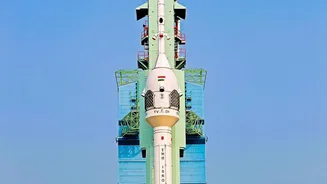
projected to be worth trillions, demanded a new approach. In 2020, India initiated historic reforms, opening the doors for private companies to participate in all aspects of space activity. This strategic shift was not about replacing ISRO, but evolving its role. ISRO is now transitioning from being the sole operator to a facilitator and mentor, focusing on advanced research and development while enabling a new generation of entrepreneurs to build, launch, and operate their own space technologies. This public-private partnership is designed to accelerate innovation and capture a larger share of the global market.
The New Kids on the Launchpad
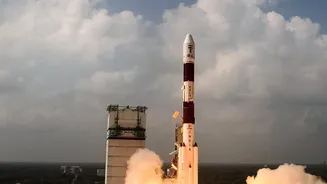
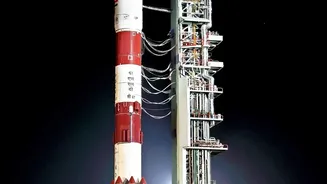
The most visible sign of this expansion is the rise of private launch vehicle companies. Startups are developing rockets specifically for the booming small satellite market, offering more frequent and dedicated launches. Hyderabad-based Skyroot Aerospace made history in July 2026 with the successful orbital launch of its Vikram-1 rocket, becoming the first private Indian company to achieve this feat on its maiden attempt. This milestone demonstrated that private firms could independently develop and operate complex launch capabilities. Another key player, Chennai-based Agnikul Cosmos, is gaining attention for its innovative approach, including the world's first single-piece 3D-printed rocket engine. These companies are not just building hardware; they are creating a competitive domestic industry aimed at making India a global hub for affordable and reliable satellite launches.
A Constellation of Satellite Opportunities
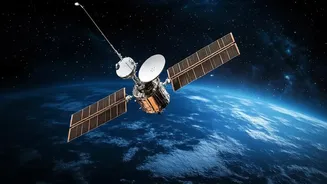
The expansion extends well beyond launch vehicles. A burgeoning ecosystem of startups is focused on designing, manufacturing, and operating satellites. The demand for small satellites is surging globally for applications like Earth observation, communication, and navigation. Indian companies like Pixxel, which is building a constellation of hyperspectral imaging satellites, and Dhruva Space, which offers satellite-as-a-service solutions, are at the forefront of this trend. The growth in this segment is exponential, with the number of Indian space startups soaring from just one in 2014 to over 440 by 2026. This rapid development is creating a full-stack space ecosystem, with companies working on everything from satellite components and propulsion systems to data analytics platforms that convert raw satellite data into actionable insights for various industries.
IN-SPACe: The Ground Control for Growth
A critical component of this new architecture is the Indian National Space Promotion and Authorisation Centre (IN-SPACe). Established in 2020, IN-SPACe acts as a single-window agency to promote, regulate, and authorize the activities of private space companies. Its primary role is to bridge the gap between ISRO and the private sector, allowing startups to access ISRO's world-class testing facilities, infrastructure, and technical expertise. By serving as both a facilitator and a regulator, IN-SPACe ensures that private missions comply with national and international guidelines while fostering a predictable and encouraging environment for investment. This framework has been instrumental in granting the necessary authorisations for private launches and satellite operations, effectively creating the rulebook for India's new commercial space age.