




What Exactly Is Zone 2 Training?
You may have heard elite athletes and fitness experts talking about 'Zone 2,' but it’s a simple and powerful concept for everyone. Imagine five zones of exercise intensity, with Zone 1 being a very light effort and Zone 5 being an all-out sprint. Zone 2 is the
sweet spot right in between: a steady, moderate intensity where your heart rate is at about 60% to 70% of its maximum. The easiest way to think about it is 'conversational cardio.' If you can hold a conversation without gasping for breath, you're likely in Zone 2. It’s not about pushing until you can’t go anymore; it’s about maintaining a comfortable pace that you can sustain for a longer period, typically 30 minutes or more. This type of training forms the foundation, or 'base,' of any good endurance program.
The Science-Backed Benefits
The magic of training in Zone 2 lies in how it transforms your body's energy systems. When you work out at this moderate intensity, you primarily teach your body to become incredibly efficient at burning fat for fuel. This not only helps with weight management but also preserves your stored carbohydrates (glycogen) for when you need a burst of speed or power. Furthermore, Zone 2 training is a powerhouse for your cells. It stimulates the growth and efficiency of your mitochondria, the tiny engines within your cells that produce energy. More efficient mitochondria mean more energy for your workouts and your daily life. It also significantly improves cardiovascular health, reduces your risk of overtraining, and even boosts mental clarity and focus.
Why Choose the Rower?
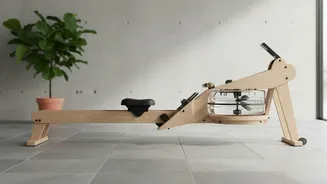
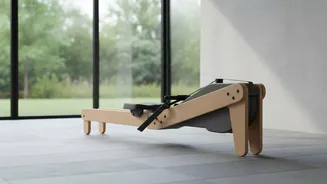
While you can do Zone 2 training with many activities like brisk walking or cycling, the rowing machine is a uniquely perfect partner for this method. First and foremost, rowing is a low-impact exercise. This means it puts minimal stress on your joints, particularly your knees, ankles, and hips, which can take a beating from high-impact activities like running. This makes it an excellent choice for people of all ages, fitness levels, or those nursing old injuries. Second, rowing is a true full-body workout. Each stroke engages over 85% of your body's muscles, including your legs, core, back, and arms. This comprehensive muscle engagement helps elevate your heart rate steadily and keep it in the desired zone, all while building balanced, functional strength. Finally, a rowing machine gives you complete control over your intensity, making it easy to find and maintain your Zone 2 pace.
How to Find Your Personal Zone
Finding your Zone 2 heart rate range is simple. The most common method uses a straightforward formula: subtract your age from 220 to estimate your maximum heart rate (MHR). For example, if you are 40 years old, your estimated MHR is 180 beats per minute (bpm). Your Zone 2 range would then be 60% to 70% of that number. - 180 bpm x 0.60 = 108 bpm - 180 bpm x 0.70 = 126 bpm So, for a 40-year-old, the target heart rate for a Zone 2 workout is between 108 and 126 bpm. You can track this using a heart rate monitor or a fitness watch. However, you don't need technology to get started. You can use the 'talk test': as you row, you should be able to speak in full sentences without struggling for air. If you can only manage one or two words, you're pushing too hard. If you can easily sing a song, you might need to increase your effort slightly.
Putting It All Into Practice
Ready to get started? A typical Zone 2 rowing session is more about duration than intensity. The goal is to accumulate time in your target heart rate zone. Here is a simple workout structure to begin with: 1. Warm-Up (5 minutes): Start with very light rowing, gradually increasing your pace. Focus on establishing a smooth, consistent technique. 2. Main Set (30-45 minutes): Settle into a steady rhythm that keeps your heart rate within your calculated Zone 2 range. Don't worry about speed or the distance covered. Your only job is to stay in the zone. If you don't have a heart rate monitor, use the talk test to guide your effort. 3. Cool-Down (5 minutes): Gradually decrease your intensity, allowing your heart rate to come down slowly. Finish with some light stretching, focusing on your hamstrings, glutes, and back. For best results, aim to incorporate two to three Zone 2 sessions into your weekly routine. Consistency is the key to building a deep and resilient endurance base.