



Masking a toddler can feel like a daunting task for any parent. Their unique needs mean that general mask advice doesn't always apply. Understanding the specific guidance for this age group is key to balancing safety, comfort, and protection.
Why Toddlers Need Special Care
Guidance
from health authorities, including India's Ministry of Health, highlights that children under five have different needs than older kids. In fact, masks are not recommended at all for children under the age of two due to the risk of suffocation. Toddlers, generally considered to be between two and five, have smaller airways, which can make breathing through a mask more difficult. They also lack the ability to reliably remove a mask on their own if they experience trouble breathing or to clearly communicate their distress. Furthermore, their natural tendency to touch their faces frequently could increase infection risk if the mask is not handled properly. Because of these developmental and physiological factors, any mask use in this age group requires strict supervision and is often recommended only for short durations in specific situations.
Finding the Right Fit and Material
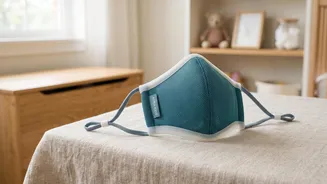
For toddlers who do wear a mask, fit and filtration are the two most critical factors. An ill-fitting mask is an ineffective one. Look for masks specifically designed for children, often labelled by age group (e.g., 2-5 years). The mask must cover the nose, mouth, and chin completely without any significant gaps at the sides. If you can see gaps or if your child’s glasses fog up, the fit isn't right. Adjustable ear loops and a flexible nose wire can help create a snug but comfortable seal. In terms of material, experts often recommend masks with at least three layers: an outer water-resistant layer, a middle filter layer, and a soft, absorbent inner layer. This construction helps block respiratory droplets while remaining breathable.
Making Mask-Wearing a Positive Experience
Getting a toddler to accept a mask requires patience and positivity. One of the most effective strategies is for parents to model the behavior themselves. When children see their caregivers wearing masks, it helps normalize the experience. You can also introduce the mask during playtime, perhaps by putting one on a favorite stuffed animal or doll. Framing it as a 'big kid' activity can also be motivating for some toddlers. Offering choices, such as letting them pick between two masks with different colours or fun characters, gives them a sense of control. It's also helpful to start with very short periods of wear time at home and gradually increase the duration as they become more comfortable.
Supervision is Non-Negotiable
The most important precaution is constant adult supervision. A toddler should never be left alone while wearing a mask, especially while sleeping. Indian government guidelines specify that any mask use for children aged 6-11 should be under the direct supervision of parents, a principle that applies even more strictly to the younger 2-5 age group. Parents and caregivers must watch for any signs of breathing difficulty, distress, dizziness, or skin irritation. If a child is struggling, seems uncomfortable, or continuously pulls at the mask, it should be removed. Forcing a distressed child to wear a mask can be counterproductive and unsafe. Instead, it is better to move to an area with cleaner air or less crowding. Other protective measures, such as maintaining physical distance and practicing good hand hygiene, remain crucial for this age group.