



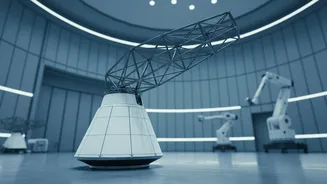
A Lifeboat for the Final Frontier
Before Indian astronauts, or 'Vyomanauts', can journey to orbit, the Indian Space Research Organisation (ISRO) must ensure their safety above all else. Central to this promise is the Crew Escape System (CES). Think of it as the most sophisticated ejector
seat ever built. Its sole purpose is to pull the Crew Module—the capsule carrying the astronauts—away from the launch vehicle in case of an emergency. Whether on the launchpad or during the powerful ascent through the atmosphere, the CES is designed to fire powerful, quick-acting solid motors to carry the crew to a safe distance, allowing for a normal parachute deployment and landing. This system is one of the core new technologies ISRO has developed for the monumental Gaganyaan programme.
Simulating a High-Altitude Emergency
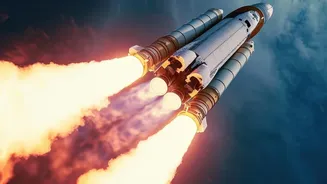
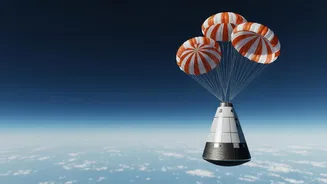
While ISRO had previously tested the escape system from the launchpad in 2018, the most recent demonstration was a far more complex, high-altitude abort test. These tests, part of the Test Vehicle (TV) flight series, are designed to simulate an emergency scenario during ascent, one of the riskiest parts of any space mission. In a recent flight, a test vehicle launched to a predetermined altitude, after which the abort sequence was deliberately triggered. The Crew Escape System's motors fired, pulling the uncrewed Crew Module away from the rocket at high speed. The module then successfully oriented itself and deployed a series of parachutes to slow its descent, culminating in a safe splashdown in the Bay of Bengal, where it was recovered by naval teams. This validates the system's performance under realistic flight conditions.
Why This Test is Crucial for Gaganyaan
The success of this high-altitude abort test is a non-negotiable requirement before ISRO can proceed with uncrewed and, eventually, crewed missions. It proves that the intricate sequence of events—from detecting a failure to separating the module and deploying parachutes—works flawlessly in a dynamic, high-stress environment. It’s one thing for the system to work on the ground; it's another entirely for it to perform perfectly at thousands of kilometres per hour at an altitude of around 17 kilometres. This milestone is part of a comprehensive series of validations that also includes integrated air drop tests for the parachute system and qualification of the crew module's structural integrity. Together, these successful trials build confidence in the overall architecture of the mission and demonstrate that astronaut safety remains the top priority.
The Path to India's First Human Spaceflight
With the Crew Escape System now flight-proven at high altitude, the Gaganyaan mission moves closer to its next major phases. The programme is structured to include at least two uncrewed test flights before the first historic crewed mission. The first of these uncrewed flights, G1, will test the performance of the entire vehicle, life support systems, and re-entry procedures. Following the successful validation of all systems, India will launch three astronauts into a low Earth orbit of 400 kilometres for a mission lasting up to three days. This will make India the fourth nation in the world—after the United States, Russia, and China—to possess independent human spaceflight capability, a landmark achievement for the country's science and technology sector.