


Introducing SeaNav: A Digital Ocean
Researchers at the Indian Institute of Technology Madras have developed an innovative platform called 'SeaNav', short for Sea Navigation. It is not a physical ship, but a highly realistic digital twin platform designed to test, validate, and train the artificial
intelligence behind self-driving maritime systems. Developed by the Department of Ocean Engineering, SeaNav addresses one of the biggest hurdles for autonomous shipping: the danger and expense of testing unproven navigation algorithms on actual vessels in the open sea. This virtual environment allows for rigorous testing without any real-world risk.
How It Creates a Virtual Reality
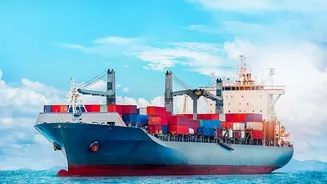
SeaNav operates using the Unity3D engine, the same technology framework behind many popular video games, to create a 'digital twin' of the maritime world. This isn't just a simple simulation; it accurately replicates complex factors like ocean waves, vessel movements, and various navigation environments. To ensure its accuracy, the simulator has been calibrated against the real-world performance of a 320-meter-long commercial tanker ship. This allows the results from virtual tests to closely mirror what would happen in actual commercial shipping operations, a crucial step for developing reliable technology.
The Problem of Real-World Testing
The global shipping industry is the backbone of world trade, carrying over 80% of all goods. While autonomous ships promise to make this process more efficient and safer by reducing human error, testing them is incredibly complex. Real-world trials are not only expensive but also potentially hazardous to other vessels and the marine environment. SeaNav bypasses this challenge by creating a high-fidelity virtual space where ships, sensors, ocean conditions, and vessel traffic can all be simulated in real time. It even models realistic sensor limitations like noise and delays, preparing the AI for difficult conditions like fog and heavy rain.
More Than Just a Simulator
The platform combines digital twins with AI, advanced sensor fusion, and an immersive Virtual Reality (VR) interface. Using Meta Quest headsets, trainees and maritime professionals can step onto the virtual bridge of a ship to experience scenarios firsthand. This makes SeaNav a powerful training tool for emergency response, collision avoidance, and manoeuvring in busy ports. According to Dr. Suresh Rajendran, Associate Professor at IIT Madras's Department of Ocean Engineering, this creates a safe and efficient environment for training both autonomous systems and human operators before they are deployed in the real world.
Aligning with India's Maritime Vision
This innovation is not happening in a vacuum. SeaNav directly supports the goals of the Indian government's 'Sagarmala Programme' and the 'Maritime India Vision 2030'. Both initiatives emphasize the need for smart ports, digital technologies, and autonomous systems to modernize India's maritime sector. The platform's ability to simulate multiple vessels at once also gives it potential applications in coastal surveillance, search-and rescue operations, and maritime defence. By developing AI-assisted navigation, SeaNav can directly help strengthen safety at major Indian ports like Chennai, Mumbai, Visakhapatnam, and Kochi.