



Why August is a Great Month for Saturn
While Saturn will reach its official 'opposition'—the point where Earth is directly between it and the Sun—on October 4, the lead-up months provide fantastic viewing opportunities. During this period, the planet is relatively close to Earth, making it appear
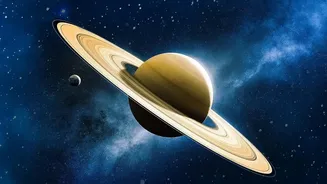
bigger and brighter in our sky. Throughout August 2026, Saturn will be visible for most of the night, rising in the east and gracing the sky until dawn. This extended visibility gives stargazers in India a generous window to find and admire this celestial jewel. In early August, Saturn rises around 11:30 PM, but by the end of the month, it will be visible as early as 10 PM.
How to Find Saturn in the Night Sky
You don't need to be an expert to locate Saturn. It will appear as a bright, steady, yellowish point of light. Unlike stars, which twinkle, planets shine with a more constant glow. This month, Saturn will be found in the constellation Cetus. It will rise in the southeastern sky and travel westwards as the night progresses, reaching its highest point in the sky around midnight—which is often the best time for viewing as you are looking through less of Earth's distorting atmosphere. Several smartphone apps, like SkyView or Star Walk, can help you pinpoint its exact location from your city with ease.
Viewing with Your Eyes, Binoculars, and Telescopes
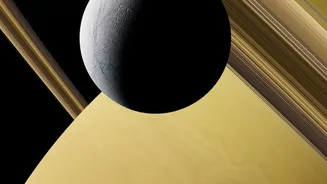
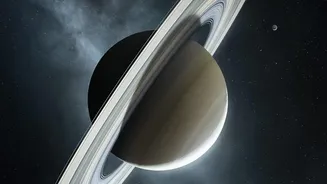
The great thing about viewing Saturn is that it’s accessible to everyone, regardless of equipment. With the naked eye, it’s a distinctly bright 'star'. If you have a pair of binoculars, they will steady the view and might reveal Saturn as a tiny, non-circular object, hinting at its unique shape. However, the real magic happens with a telescope. Even a small, beginner telescope with at least 50mm aperture is powerful enough to reveal Saturn's most famous feature: its rings. At a magnification of about 25x to 50x, you should be able to distinguish the rings from the planet itself, an unforgettable sight that has captivated astronomers since Galileo first observed it.
Tips for the Best Viewing Experience
To make the most of your stargazing session, a few simple tips go a long way. First, find a location away from city lights. Light pollution washes out fainter objects and reduces contrast, making it harder to see details. Second, give your eyes time to adjust to the darkness. It takes about 20-30 minutes for your eyes to become fully dark-adapted, which will allow you to see much more. Avoid looking at your bright phone screen; if you need a light, use a torch with a red filter, as red light doesn't spoil your night vision. Finally, check the weather forecast for a clear, cloudless night. Patience is key in astronomy.
Other Celestial Events in August
While Saturn is a highlight, August 2026 is a blockbuster month for skywatchers. The famous Perseid meteor shower peaks on the night of August 12-13. This year's peak coincides with a new moon, creating perfectly dark skies for a spectacular show of shooting stars, with up to 100 meteors per hour possible from a dark location. Throughout the month, you can also spot Mars as a reddish point of light in the morning sky. On August 12, a remarkable alignment of six planets—including Saturn—will be scattered across the pre-dawn sky, although some will be very low on the horizon and difficult to spot.