








The New Travel Equation: Reliability Over Price
For years, the formula for booking a flight in India was simple: find the cheapest fare that fits your schedule. But a significant shift is underway. After years of unpredictable operational disruptions, passengers are now prioritising an airline's On-Time
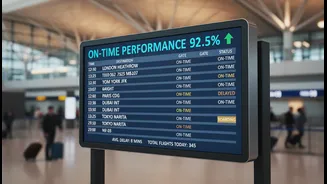
Performance (OTP) — the percentage of flights that depart or arrive within 15 minutes of their scheduled time. This isn't just about avoiding a few hours of boredom at the airport. In today's travel landscape, a single delay can trigger a costly domino effect, jeopardising non-refundable hotel bookings, crucial business meetings, and tightly planned itineraries. The 'cheapest' flight is no longer cheap if it costs you a day of your vacation or a business opportunity. This new travel calculus considers the total cost of the journey, not just the price of the ticket.
What the Data Reveals About Indian Airlines
This trend is powered by data that is more accessible than ever. The Directorate General of Civil Aviation (DGCA) publishes monthly OTP reports for domestic airlines, providing a clear, unbiased look at who is running on time. According to recent DGCA data for May 2026, there are clear performance gaps between carriers. IndiGo led the pack with an OTP of 82.8% at the country's busiest airports, followed by Akasa Air at 78.3% and the Air India Group at 74.5%. For travellers, these numbers are more than just statistics; they are a powerful tool for risk assessment. An airline with a consistent OTP above 80% offers a significantly higher probability of a smooth journey compared to one with a lower or more volatile record. And it’s not just airlines; airports matter too. Data from May 2026 shows Chennai airport leading with a 92.2% OTP, while major hubs like Mumbai had a tougher time.
The Hidden Costs of a Delayed Flight
The frustration of a delay goes far beyond the initial inconvenience. While DGCA rules mandate compensation for passengers, including meals for delays over two hours and hotel stays for overnight disruptions, these measures often don't cover the full extent of the loss. For a family on holiday, a six-hour delay can mean losing the first evening of their trip and the cost of a pre-paid activity. For a business traveller, it could mean missing a critical client meeting. In May 2026 alone, flight delays impacted over 177,000 passengers in India, with airlines spending crores on facilitation. This highlights the scale of the problem and reinforces why travellers are becoming more proactive. They are trading the gamble of a low-fare, low-OTP ticket for the peace of mind that comes with a reliable carrier, even if it costs slightly more upfront.
How to Be a Data-Savvy Traveller
Empowered by transparent data, you no longer have to book flights blindly. Before making a decision, take a few minutes to become an informed consumer. The DGCA releases monthly performance reports that are publicly available. Many travel portals are also beginning to integrate OTP data directly into their search results, making comparisons effortless. Look at an airline’s performance not just nationally, but specifically at your departure and arrival airports if possible, as congestion can create a ripple effect. For example, Air India has shown significant improvement, ranking as the world's fourth most on-time airline in June 2026 according to analytics firm Cirium, with an impressive 86.85% on-time arrival rate. This shows that concerted efforts in operational efficiency can lead to tangible results that benefit passengers.