






Why Window Seats Don't Always Have Windows
The mystery of the misaligned window isn't a manufacturing flaw. Aircraft manufacturers like Boeing and Airbus design fuselages with windows placed at structurally optimal intervals, typically every 20 inches or so. The problem arises because each airline
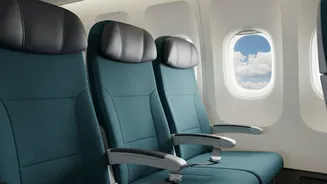
decides how to configure the interior. When an airline receives a new plane, it's essentially an empty shell. To maximize passenger capacity and revenue, carriers often install seat tracks that allow for flexible spacing, or 'pitch'. They might choose a 31-inch pitch for economy seats, while the manufacturer may have designed the layout around a 34-inch pitch. This discrepancy causes the seats and windows to gradually fall out of sync along the length of the cabin. In some cases, a seat row might land directly in line with a solid section of the fuselage that contains essential components like air conditioning ducts or electrical wiring, resulting in a completely missing window.
Your Pre-Flight Seat-Checking Toolkit
For years, travellers relied on SeatGuru to identify good and bad seats, but the site is no longer updated and has been officially shut down. Fortunately, a new generation of more precise tools has emerged. The leading resource for obsessive planners is AeroLOPA. The name stands for Layout of Passenger Accommodations, and it features incredibly detailed, to-scale architectural drawings of cabins. Unlike older sites that used generic diagrams, AeroLOPA shows the exact alignment of each seat with the windows, so you can see precisely what you're getting. Another strong alternative is SeatMaps.com, which offers a more traditional experience similar to the old SeatGuru, complete with color-coded maps and reviews, and is updated weekly. These sites are your best defense against a disappointing view.
How to Use Seat Maps Like a Pro
Using these tools effectively takes just a few minutes. First, you need to know your airline, flight number, and, most importantly, the specific aircraft type you'll be flying on (e.g., Boeing 737-800 or Airbus A321neo). You can find this information in your booking confirmation. Once you have the aircraft details, visit AeroLOPA or SeatMaps. On AeroLOPA, you'll navigate by airline and then select the correct aircraft model from their fleet list. The site will display a highly accurate diagram showing where bulkheads, lavatories, and, crucially, windows are located relative to every seat. You can visually confirm if, for example, seat 11A has a perfect view, a partial view, or no view at all. SeatMaps allows you to search by flight number, which simplifies the process, and uses color-coding to flag seats with potential issues like limited recline or a missing window, making it very user-friendly.
Beyond the Websites: Other Smart Checks
What if your specific aircraft configuration isn't listed, or you want a second opinion? Frequent flyer forums like FlyerTalk can be a goldmine of information. Experienced travellers often post detailed reviews and photos of specific seats on specific routes, sometimes highlighting quirks that official maps miss. Another simple trick is to do an image search for your airline and aircraft cabin (e.g., "Air India 787-8 economy cabin"). This can often bring up photos and videos from travel bloggers or passengers that give you a real-world look at the window alignment in various rows. While it's less precise than a schematic from AeroLOPA, seeing an actual photo of your intended row can provide valuable peace of mind before you commit to a seat selection. Don't underestimate the power of a quick visual search to back up your research.
Finalizing Your Choice and Managing Expectations
Once you've identified the perfect seat, be prepared to select it as early as possible. Many airlines now charge for advance seat selection, especially for more desirable spots. For av-geeks and photographers, paying a small fee to guarantee a well-aligned window is often a worthwhile investment. If you're flying on a basic economy fare that doesn't allow for free seat selection, you can still use your research. When you check in, you may be offered the chance to pick from the remaining available seats, and your knowledge will help you quickly grab the best of what's left. It's also important to remember that airlines can and do swap aircraft at the last minute due to operational needs. While it's not common, the Airbus A320 you researched could become a Boeing 737, rendering your carefully selected seat obsolete. But by doing your homework, you dramatically increase your odds of enjoying the journey from 35,000 feet.