



The Ultimate Recycling Challenge
Sustaining human life in the harsh environment of space is the ultimate logistical challenge. For long-duration missions to the Moon and eventually Mars, regularly sending rockets with essentials like water and oxygen is simply not feasible. This is where
closed-loop life support systems come in. Unlike the single-use systems of the Apollo era, which vented resources to space, a closed-loop system aims to regenerate, recycle, and reuse everything an astronaut needs to survive. NASA’s Environmental Control and Life Support System (ECLSS) is at the forefront of this effort, pioneering technologies that treat the spacecraft or lunar habitat like a miniature, self-sustaining ecosystem. The goal is to dramatically reduce the mass and volume of supplies that must be launched from Earth, making deep space exploration more affordable and sustainable.
From Wastewater to Drinking Water
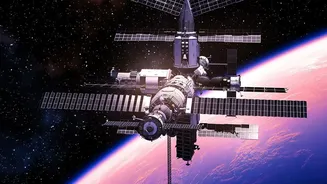
One of the most significant recent breakthroughs lies in water recovery. The ECLSS on the International Space Station (ISS) has become a critical testbed for these technologies. The system collects moisture from every possible source, including crew members' breath, sweat, and urine. This wastewater is then sent to a Water Processor Assembly, which purifies it through a series of filters and a catalytic oxidizer. A major advancement came with the development of the Brine Processor Assembly (BPA). Previously, the urine processing system left behind a brine with a small but significant amount of water. The BPA extracts this final fraction of water, pushing the overall water recovery rate to an incredible 98%. This milestone is a game-changer, proving that nearly all water brought on a long-duration mission can be continually reused, meeting the stringent requirements for a trip to Mars.
Breathing Easy on the Moon
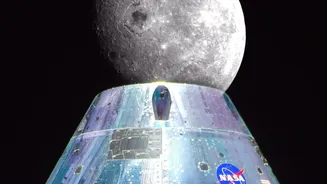
Equally critical is air revitalization. Humans exhale carbon dioxide (CO2), which becomes toxic in a sealed environment. For decades, NASA has worked on creating reliable, regenerative systems to scrub CO2 from the air and generate fresh oxygen. The Orion spacecraft, built for Artemis missions, features a redesigned system that is lighter and more efficient than its predecessors on the space shuttle. It uses reusable filters that can be regenerated by being exposed to the vacuum of space, venting the captured CO2. On the ISS, NASA has been testing next-generation scrubbers, such as the Thermal Amine Scrubber and the Four Bed Carbon Dioxide Scrubber (FBCO2). These systems provide valuable operational data, helping engineers design even more robust and reliable air systems for future habitats on the Moon and Mars.
Beyond Water and Air
A truly closed loop addresses more than just water and air. Researchers are now tackling the challenge of waste management and food production. Recent experiments involve mobile wastewater treatment systems that not only purify water but also convert food and fecal waste into nutrient-rich water for hydroponic gardens. This creates a synergistic system where astronaut waste helps grow fresh food, further reducing the need for resupply missions. Some projects are even exploring how to process waste to produce lactic acid, which can be used to create bioplastics for 3D printing. This would allow astronauts to manufacture replacement parts or tools on-site, a critical capability for missions far from home.
Artemis as a Proving Ground
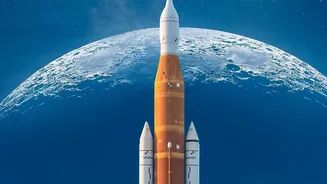
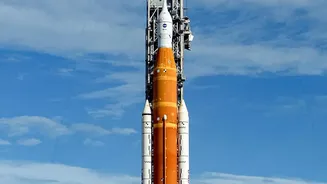
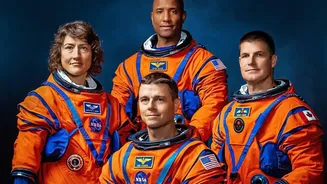
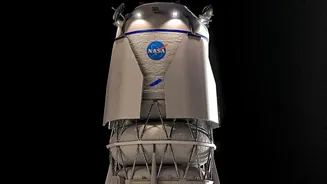
The Artemis program is not just about returning to the Moon; it's about learning to live there. The lunar surface and the Gateway, an outpost that will orbit the Moon, will serve as the ultimate proving ground for these advanced life support technologies. Operating these systems for extended periods in a real deep-space environment will provide invaluable data on their performance, reliability, and maintenance needs. Challenges like the abrasive nature of lunar dust must be overcome to ensure hardware longevity. Every lesson learned on the Moon will be directly applied to the design of the first human missions to Mars, ensuring that when astronauts finally embark on that multi-year journey, they have the life support systems they need to arrive, explore, and return safely.