



Why Cuts and Methods Matter
Anyone can follow a recipe, but understanding the relationship between the size of a vegetable and the cooking method unlocks a new level of control in the kitchen. A vegetable's cut determines its surface area, which in turn affects how it interacts
with heat and oil. A finely minced carrot will release its flavour and soften into a sauce much faster than a large, chunky piece. Similarly, a long, flat slice of brinjal will char beautifully on a grill, developing a smoky taste that you wouldn't get from small cubes. Uniform cuts are not just for professional chefs; they ensure every piece in your dish cooks evenly, preventing a mix of mushy and raw bites. By consciously choosing your cut, you are deciding on the final texture and flavour profile of your meal.
A Guide to Essential Cuts
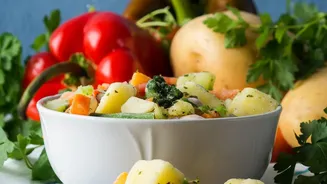
You don't need to master every French culinary term, but knowing a few basic cuts can revolutionise your cooking. A 'chop' creates irregular but similarly-sized pieces, perfect for rustic soups or a base that will be blended. 'Dicing' produces small, uniform cubes that cook evenly and are ideal for a sabzi or fresh salsa. For stir-fries, the 'julienne' or matchstick cut provides a delicate crunch. Larger 'baton' cuts, like thick fingers, are perfect for roasting root vegetables like carrots and sweet potatoes or for serving as crudités. For leafy greens like spinach (palak) or fenugreek (methi), a 'chiffonade' cut, which creates thin ribbons, works wonderfully. The key is to match the cut to the desired outcome: fine cuts for melding flavours and larger cuts for a more substantial bite.
Pairing with Summer and Monsoon Vegetables
India's summer and monsoon seasons offer a bounty of vegetables that respond beautifully to varied preparations. Take bottle gourd (lauki), a summer staple. Grating it allows you to make flavourful koftas, while dicing it into cubes prepares it for a simple, comforting curry. Okra (bhindi) is best when kept relatively whole or cut into long pieces for a quick, high-heat stir-fry (bhindi fry) that prevents it from becoming slimy. In the monsoons, pointed gourd (parwal) can be sliced for a shallow-fried dish, and foraged greens like Turkey berry (kutumba) are often lightly crushed and sautéed to let their earthy flavour shine through. By changing the cut, you can enjoy the same vegetable in entirely new ways throughout the season.
Mastering Winter Produce
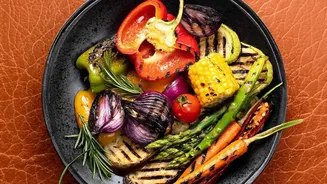
Winter brings hearty vegetables like carrots, cauliflower, peas, and an abundance of leafy greens. This is the perfect season for roasting. Chopping carrots, potatoes, and cauliflower (gobhi) into large, chunky batons and roasting them with minimal spices brings out their natural sweetness. The large surface area allows for great caramelisation. For a classic Aloo Gobhi, the cauliflower florets are kept larger to maintain their structure during cooking. Leafy greens like mustard (sarson) and spinach (palak) are often finely chopped or pureed to create iconic dishes like Sarson ka Saag and Palak Paneer, where the vegetable melts into a creamy, flavourful base. Smaller, new potatoes (notun aloo) are often used whole in dishes like Aloo Dum, allowing their texture to be the star.
Your Weekly Meal Plan Blueprint
To avoid mealtime monotony, think about your weekly plan in terms of cuts and methods, not just ingredients. This approach ensures textural and flavour variety. A simple template could look like this: Monday could be a 'sheet-pan' night with large-cut roasted winter vegetables. On Tuesday, use finely chopped greens in a dal or a quick stir-fry with julienned vegetables. For Wednesday, plan a dish with diced vegetables, like a mixed vegetable sabzi or a sambar. Thursday could feature grated vegetables in parathas or raita. By Friday, you might make a curry that uses roughly chopped onions and tomatoes for its base. This strategy flips the usual meal planning script: instead of the recipe dictating the ingredients, you let the seasonal ingredients on hand guide your choice of cut and cooking method.