






The New Robotic Workforce
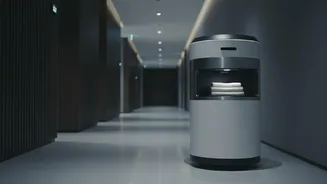
Robots are no longer a novelty in the hotel industry; they are an increasingly integral part of operations. You can find them greeting guests as concierges, delivering room service, cleaning hallways, and even mixing drinks. Brands like Marriott and Hilton
have experimented with robotic staff for years, using them to handle repetitive tasks and free up human employees for more complex guest interactions. These robots, ranging from humanoid greeters like 'Connie' to efficient delivery bots, are deployed to enhance efficiency and provide a tech-forward experience. Driven by persistent staffing shortages and the falling cost of technology, their presence is set to become even more commonplace in the coming years.
More Than Just a Machine
Here’s the critical part that is often overlooked: these robots are mobile data collection platforms. To navigate a hotel, a delivery robot uses cameras and sensors. A concierge robot uses microphones to understand your questions. They can track your requests, log your movements, and record interactions. This data can include everything from your dining preferences to the times you enter and leave your room. While hotels might use this information to personalize services, the potential for misuse is significant. This isn't just about operational data; it's about deeply personal information being collected by a machine with no off-switch for its senses.
The Erosion of Guest Trust
Hospitality is built on a foundation of trust. Guests expect privacy and discretion, a standard that has existed for centuries. However, the introduction of IoT devices and robots is quietly undermining this expectation. Many guests are unaware of the full sensory capabilities of the devices around them, and hotel staff are often not trained to explain them. With the hospitality industry already a target for data breaches, adding insecure robotic devices to the network increases the risk exponentially. A single breach of a robot's data could expose sensitive guest information, leading to a catastrophic loss of reputation and trust that no amount of efficiency can repair.
A New Standard for Service
Relying on existing data protection laws like GDPR is not enough. These regulations provide a baseline, but the unique nature of service robots—mobile, interactive, and sensor-laden—requires a more proactive and specific approach. Hotels must move beyond mere compliance and establish a new core service standard: transparent and user-controlled robot privacy. This shouldn't be buried in a long terms-and-conditions document. It should be as simple and accessible as adjusting the room temperature. Imagine a 'privacy mode' for your room that limits a delivery robot’s data collection to only what is essential for its task, or the ability to opt out of interaction with data-gathering concierge bots in the lobby.
Privacy as a Luxury Feature
Instead of viewing this as a burden, forward-thinking hotels should see it as a competitive advantage. In an age of heightened awareness around data privacy, guaranteeing a guest's digital-physical security is the next frontier of luxury service. Hotels that are transparent about their robot's functions and provide guests with clear, simple controls will build a reputation for respecting their customers. Marketing this commitment can attract discerning travelers who value privacy as much as they do a comfortable bed or a prime location. It transforms privacy from a liability into a feature, signaling a brand that is both technologically advanced and deeply committed to the well-being of its guests.