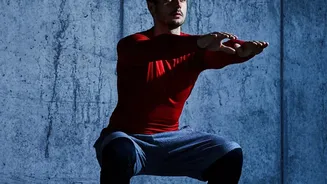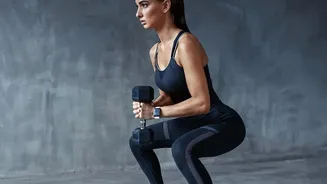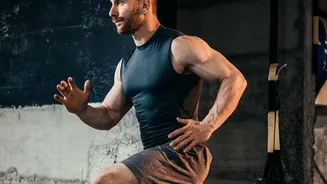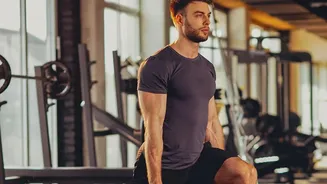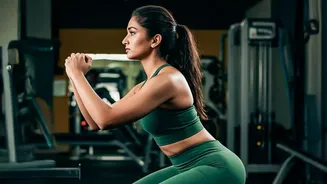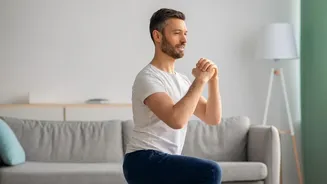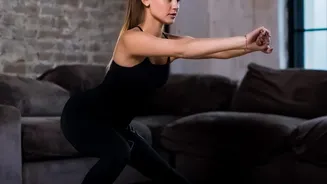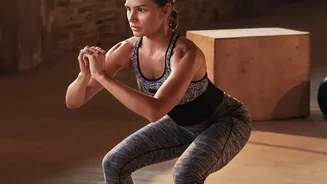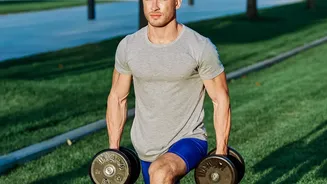





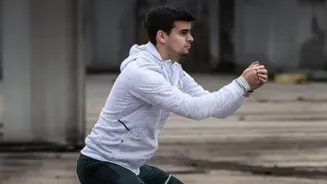
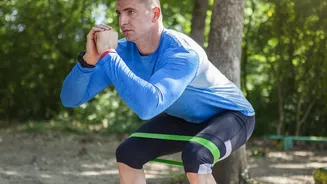
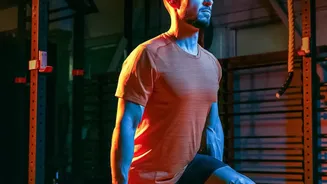
Actor Sonam Bajwa often shares glimpses of her powerful leg-day workouts, leaving many inspired. Two staples always make an appearance: squats and lunges. But are they interchangeable? Not quite. Here’s a breakdown of how each move builds strength differently.
Why a Strong Lower Body Matters
A powerful lower body isn't just for aesthetics; it's the foundation of your overall strength and fitness. Strong leg muscles, including the glutes, quadriceps, and hamstrings, power everything from walking and climbing stairs to lifting heavy objects. Building these muscles helps boost your metabolism, improves posture, and strengthens the bones and joints in your hips, knees, and ankles, reducing the risk of injury in your daily life. When you see Sonam Bajwa pushing through a heavy squat, she's building functional strength that supports her entire body.
The Squat: King of Overall Strength
The squat is often called the 'king of all exercises' for good reason. It's a bilateral movement, meaning both legs work together to lift the load. This allows you to move heavier weights, which is incredibly effective for building raw strength and muscle mass across the entire lower body. The primary muscles targeted are the quadriceps (front of the thighs) and the glutes (your butt). However, your hamstrings, calves, and core also work hard to keep you stable. Because they engage so many large muscle groups at once, squats are also a fantastic calorie-burner. Think of squats as your tool for building the powerful, main engine of your lower body.
The Lunge: Master of Balance and Stability
If the squat is about raw power, the lunge is about precision and stability. As a unilateral exercise, it works one leg at a time. This immediately challenges your balance, forcing smaller stabilizing muscles in your hips and core to fire up to keep you from wobbling. While lunges also work the quads and glutes, they place a greater emphasis on the gluteus medius (the side of your hip) for balance and can recruit the hamstrings more effectively. This single-leg focus is brilliant for identifying and correcting muscle imbalances between your right and left sides, which can help prevent injuries down the line.
The Key Difference: Bilateral Power vs. Unilateral Control
The main distinction between squats and lunges comes down to bilateral versus unilateral training. Squats provide a stable, two-footed base that allows you to maximize force and lift heavy, which is ideal for overall strength and muscle growth. Lunges, by forcing each leg to work independently, improve your balance, coordination, and functional strength that mimics real-world movements like running or changing direction. Studies show that while bilateral exercises like squats are superior for building maximum bilateral strength, unilateral exercises like lunges are excellent for improving single-leg performance and stability. They aren't competing philosophies; they are complementary tools.
How to Structure Your Workout
So, which one should you do? The answer is both. A truly effective leg day, like the kind Sonam Bajwa demonstrates, leverages the unique benefits of each exercise. A great approach is to start your workout with heavy, compound movements like squats to build your foundation of strength and power while your muscles are fresh. Then, move on to unilateral exercises like lunges. You can use lunges as an 'accessory' movement to address stability, improve balance, and ensure both legs are developing equal strength. For example, you might do 3–4 sets of heavy back squats, followed by 3 sets of walking lunges or reverse lunges to finish the workout, ensuring you've trained for both power and control.