







A New Frontier for Indian Innovation
For decades, India's space ambitions were synonymous with the Indian Space Research Organisation (ISRO). But a monumental shift is underway. Spurred by the landmark Indian Space Policy of 2023, the sector has been opened to private enterprise, sparking
an innovation boom. This policy created a clear framework, enabling private companies to participate in everything from building rockets to operating satellite services. The establishment of the Indian National Space Promotion and Authorisation Centre (IN-SPACe) as a single-window agency has been pivotal. IN-SPACe acts as a facilitator and regulator, helping startups access ISRO's world-class facilities and expertise while ensuring all activities are safe and secure. This has cultivated a vibrant ecosystem, with the number of Indian space startups growing from just one in 2014 to over 400 by 2026.
The Rocket Builders: Reaching for the Stars
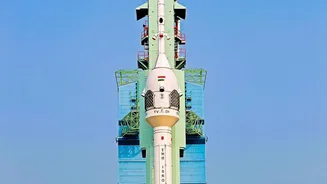
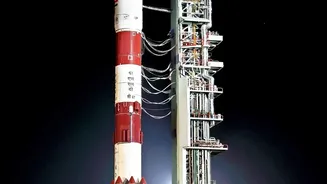
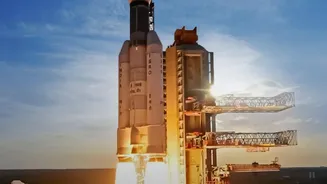
At the heart of the new space race are companies building the vehicles to get there. Skyroot Aerospace made history with the successful launch of Vikram-1 in July 2026, India's first privately developed orbital rocket. This milestone demonstrated that private Indian firms could build and launch complex, multi-stage vehicles capable of deploying satellites into orbit. Another key player, Agnikul Cosmos, has pioneered the use of 3D printing in rocket manufacturing. The Chennai-based startup successfully test-launched its Agnibaan Sub-Orbital Technology Demonstrator (SOrTeD) in May 2024, powered by the world's first single-piece 3D-printed semi-cryogenic engine. This technology drastically reduces manufacturing time and costs, positioning Agnikul to offer flexible, on-demand launches for small satellites. Both companies represent a new model of agile and cost-effective rocket development, complementing ISRO's heavy-lift capabilities.
The Satellite Makers: Eyes in the Sky
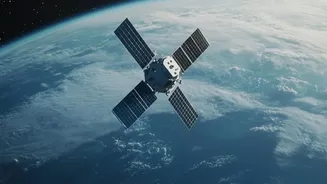
While some startups focus on launch, others are innovating in orbit. Bengaluru-based Pixxel is building a constellation of hyperspectral imaging satellites. Unlike conventional cameras, these satellites capture data from hundreds of wavelengths of light, allowing them to detect phenomena invisible to the naked eye, such as crop diseases, methane leaks, and illegal mining. With several demonstration satellites already in orbit, Pixxel plans to launch a full constellation of commercial satellites to provide a 24-hour revisit period for any point on Earth. Meanwhile, Dhruva Space operates as a full-stack company, providing satellite platforms, deployment systems, and ground station services. The Hyderabad-based firm has enabled missions for universities and foreign countries, and is developing larger satellite platforms for communications and defence. These companies are creating new revenue streams from space-based data and services, a market projected to grow exponentially.
The Fuel and the Framework
This rapid growth is fueled by more than just ambition. Significant venture capital has flowed into the sector, with cumulative private investment surging past $700 million. The government's decision to liberalise Foreign Direct Investment (FDI) rules, allowing up to 74% FDI in satellite manufacturing and 49% in launch vehicles through the automatic route, is expected to attract even more global capital and technology. The symbiotic relationship with ISRO is also crucial. The national agency is transitioning its role to focus on advanced research and deep space missions, while transferring mature technologies to the private sector. This allows startups to build upon decades of public investment and expertise. However, challenges remain. Scaling production, navigating a complex regulatory environment, and competing with established global players are significant hurdles these young companies must overcome on their path to commercial success.