






What Is an Active Fund?
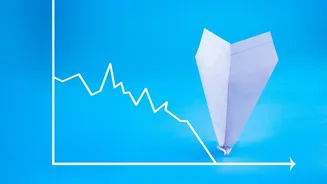
An active fund is a mutual fund where a fund manager or a team of professionals makes all the investment decisions. Their main goal is to outperform a specific market benchmark, like the Nifty 50 or Sensex. Think of them as the pilots of your investment plane,
using their expertise, research, and market analysis to navigate the markets by buying, holding, or selling securities. They might focus on undervalued companies, rotate between sectors like IT and banking, or adjust cash holdings based on their predictions for the market.
What Is a Passive Fund?
A passive fund, often called an index fund or exchange-traded fund (ETF), takes a completely different approach. Instead of trying to beat the market, its goal is to replicate the performance of a specific market index. For example, a Nifty 50 index fund will hold all 50 stocks in that index, in the same proportions. The fund manager's role is minimal, simply ensuring the fund mirrors the index's movements. There is no active stock picking or market timing involved.
The Key Difference: Cost
The most significant difference for most investors comes down to cost, measured by the expense ratio. Active funds have higher expense ratios because you are paying for the fund manager's expertise, their research team, and the higher trading costs associated with frequent buying and selling. In India, these fees can range from 1% to over 2%. Passive funds, on the other hand, are much cheaper because there is no active management team to pay. Their expense ratios are typically much lower, often between 0.05% and 0.5%. This cost difference can have a substantial impact on your long-term returns.
Performance Goals and Risk
Active funds aim to generate 'alpha', or returns above the market average, but this comes with no guarantees. You are taking on 'manager risk' – the risk that the manager's decisions could lead to underperformance. The potential for higher rewards is tied to higher risk. Passive funds don't aim to be stars; they aim for steady, market-aligned growth. Their performance will be very close to the index they track, minus the small fee. This means you won't beat the market, but you also won't significantly underperform it. The risk you take is simply the risk of the market itself.
Which Path Is Right for You?
The choice between active and passive funds is not one-size-fits-all and depends on your personal financial goals and risk tolerance. If you are a beginner looking for a simple, low-cost way to get broad market exposure for long-term goals like retirement, a passive index fund is often a great starting point. If you have a higher risk appetite and believe a skilled manager can navigate specific, less-researched market sectors (like small or mid-cap stocks) to generate higher returns, you might consider an active fund. Many investors also use a combination of both, using passive funds as the core of their portfolio and adding active funds for specific opportunities.