




A New View of a Familiar Galaxy
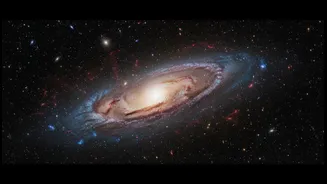
To celebrate the fourth anniversary of the James Webb Space Telescope's science operations, the international collaboration released a spectacular new portrait of Centaurus A. Located a relatively close 11 million light-years from Earth, Centaurus A is
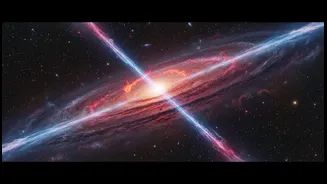
a galaxy that has long fascinated and puzzled astronomers. It’s known for being unusually active, with a supermassive black hole at its core that is actively consuming material and blasting out powerful jets of energy. While previous telescopes like Hubble and Spitzer have studied it, their views were hampered. Hubble's visible light couldn't get past the thick cosmic dust, and Spitzer, while seeing in infrared, couldn't resolve individual stars.
Seeing Through the Dust
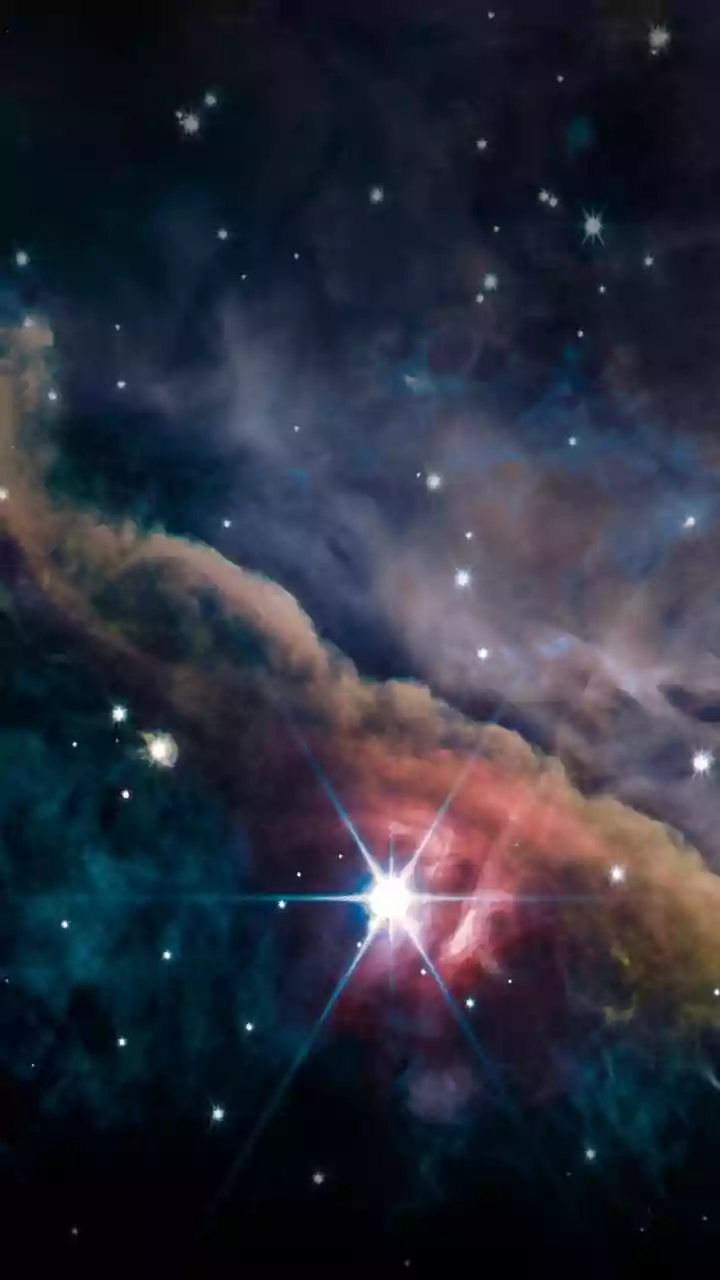
This is where the James Webb Space Telescope (JWST) changes the game. Its powerful infrared instruments, NIRCam (Near-Infrared Camera) and MIRI (Mid-Infrared Instrument), can pierce through the obscuring dust lanes that crisscross the galaxy's center. The result is an image of staggering complexity. What previously looked like dark, empty bands are now revealed to be glowing with intricate structures and wisps of material. Most remarkably, what might look like film grain or noise in the image is actually a dense field of millions of individual stars, each one now visible to astronomers for the first time.
Galactic Archaeology
Being able to see individual stars is more than just a pretty picture; it’s a scientific breakthrough that turns observation into a form of 'galactic archaeology'. Centaurus A is the product of a violent galactic merger that happened about two billion years ago. By studying the different generations of stars now visible — where they are, how they're moving, and their composition — scientists can reconstruct the galaxy's tumultuous history. They can pinpoint when different bursts of star formation occurred: before, during, and after the colossal collision that shaped the galaxy we see today. This detailed stellar timeline provides an invaluable record of cosmic history.
Unraveling Cosmic Puzzles
The new images also highlight strange and perplexing features that invite further study. Webb's MIRI instrument revealed a warped, parallelogram-shaped band of dust at the galaxy's center and a curious 'S' shaped feature that astronomers are eager to understand. These unusual shapes are likely influenced by the galaxy's past collision and the immense gravitational pull of its central black hole, but exactly how they formed remains a mystery. These new, detailed observations provide the crucial data needed to test theories about how black holes interact with and shape the galaxies that host them.
The Power of Collaboration
These discoveries are a testament to the power of international collaboration. The James Webb Space Telescope is a joint project between NASA, the European Space Agency (ESA), and the Canadian Space Agency (CSA). This partnership allows for the development and operation of observatories far too complex and expensive for any single nation to undertake. By combining their expertise and resources, these agencies are pushing the boundaries of what's possible, not just with Webb but also with other missions like ESA's Euclid telescope, which recently produced the most detailed visible-light image of the Milky Way's core. Each new image builds on the knowledge gained from previous ones, creating an ever-clearer picture of our universe.