







Satellites as Cell Towers in the Sky
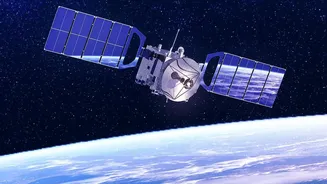
At the heart of SpaceX's plan is a technology called 'Direct to Cell'. Imagine a cell tower, but instead of being on the ground, it's a satellite orbiting hundreds of kilometres above Earth. These next-generation Starlink V2 satellites are equipped with
advanced modems that can broadcast signals directly to standard, unmodified LTE smartphones on the ground. This isn't about replacing the existing network of cell towers that powers our daily mobile use. Instead, it's designed to supplement it, filling in the gaps in coverage that exist in remote, rural, and geographically challenging areas where building terrestrial towers is difficult or uneconomical. The service is designed to start with texting and eventually expand to include voice and data services.
The Crucial Role of Spectrum
A satellite in space is only one half of the equation. To communicate with your phone, it needs to use specific radio frequencies known as spectrum. This spectrum is a highly regulated and valuable resource, licensed by governments to mobile network operators like Jio, Airtel, and Vodafone Idea in India. SpaceX can't simply broadcast on these frequencies. Instead, its strategy relies on partnerships with these existing carriers, using their licensed spectrum to provide what is essentially a seamless roaming service. When you move out of range of a ground tower, your phone would automatically connect to a satellite using your carrier's spectrum. Recent moves in the U.S., where SpaceX agreed to acquire a portfolio of low-band 800 MHz spectrum, signal a broader ambition. This type of spectrum is excellent at travelling long distances and penetrating buildings, addressing a key weakness of satellite-only signals and paving the way for a more robust, hybrid network.
A Hybrid Future for Connectivity
The long-term vision is a unified network where your phone seamlessly switches between the fastest available connection, whether it's a 5G tower in a city, a Wi-Fi network at home, or a Starlink satellite while hiking in the mountains. This hybrid model represents a significant shift from the traditional separation of terrestrial and satellite communications. Instead of two distinct systems, SpaceX is building a single, integrated architecture. The company's recent deals in the U.S. to acquire its own terrestrial spectrum suggest it may eventually compete directly with major carriers, combining its space-based assets with ground infrastructure. However, industry incumbents argue that building a competing ground network is incredibly expensive and that satellite technology is best suited for covering the last few percent of a country's geography, not for competing in dense urban areas.
The Opportunity and Hurdles in India
For a country like India, with its vast and diverse geography, the potential of direct-to-cell technology is immense. It could bring reliable connectivity to remote villages, improve emergency response during natural disasters, and help close the digital divide. However, the path to launching in India has been complex. As of October 2026, Starlink, along with competitors like OneWeb and Jio's own satellite venture, has received a licence but is still undergoing mandatory security assessments before it can be assigned spectrum and begin commercial operations. The Indian government has rejected claims of unfair delays, stating that all applicants are at a similar regulatory stage. Concerns around security and the government's ability to control the network during emergencies remain key points of discussion. While Starlink executives have stated they are working to comply with Indian regulations, a definitive timeline for launch remains unclear.